By Micah Jonah
January 18, 2026
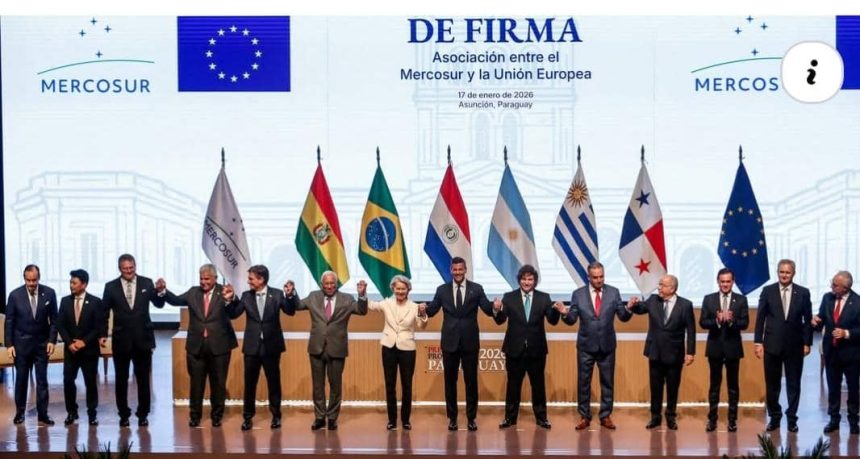
After more than two decades of stalled talks and political hesitation, the European Union and the South American bloc, Mercosur have finally signed a free trade agreement, a move that signals a clear shift towards economic pragmatism in an increasingly fragmented global economy.
The deal was signed in Asuncion, Paraguay, by senior EU officials and leaders of Mercosur countries Argentina, Brazil, Paraguay and Uruguay, paving way for what would become the European Union’s largest trade agreement once ratified by all member legislatures.
Supporters of the agreement see it as long overdue. Trade between both regions already stood at about 111 billion euros in 2024, yet tariffs and regulatory barriers continued to limit growth. The pact is expected to lower tariffs, expand market access and strengthen supply chains across agriculture, manufacturing and industrial goods.
European Commission President, Ursula von der Leyen described the agreement as a choice for cooperation over isolation, arguing that it sends a message that trade partnerships remain central to economic stability despite rising protectionism in many parts of the world.
From a political standpoint, the timing is telling. With new tariff threats emerging from the United States and global trade rules under strain, the EU and Mercosur appear to be securing strategic economic ground rather than waiting for a more favorable climate which may never come.
European farmers and environmental groups have long warned that cheaper South American agricultural imports could hurt local producers, accelerate deforestation. These concerns are not minor, if ignored, could fuel domestic backlash, delay ratification in several European countries.
On the South American side, Brazil has framed the agreement as part of a broader push to diversify markets, reduce dependence on a narrow set of trading partners. Officials argue that deeper access to European markets could drive investment, industrial upgrading and job creation across the region.
Yet, the real test begins now. Approval by the European Parliament and national legislatures in Mercosur countries is not guaranteed, and political shifts could still derail the process. What looks like a diplomatic victory on paper must survive domestic politics, economic anxieties and environmental scrutiny.
In the end, this agreement reflects a simple reality. Both blocs need each other more than ever, in a world where trade is increasingly weaponized. Whether the deal delivers balanced growth or deepens existing tensions, will depend on how seriously leaders address the social and environmental costs, alongside the economic gains.