By Micah Jonah
February 18, 2026
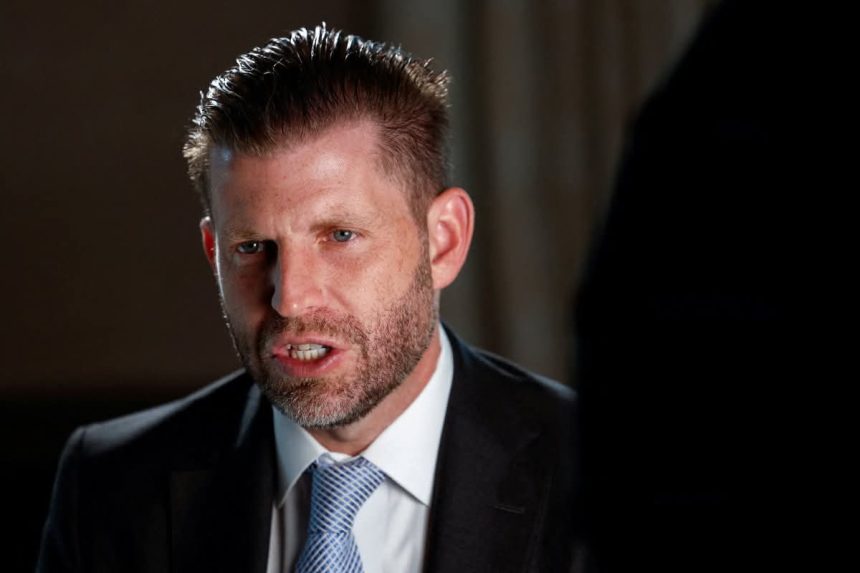
Donald Trump’s son, Eric Trump, has invested in a $1.5 billion merger involving Israeli drone manufacturer Xtend and Florida-based construction firm JFB Construction Holdings, raising fresh concerns over potential conflict of interest as the Trump family expands its business footprint during his second term in office.
According to a statement released by JFB Construction, the deal is aimed at taking Xtend public later this year. The merger will combine Xtend’s drone manufacturing operations with JFB’s construction and infrastructure portfolio in what company executives described as a strategic move to scale production and access US public markets.
Xtend, an Israeli technology company, has supplied drones used by the Israeli military, including for operations in Gaza where its systems were reportedly deployed to map underground tunnels. The company has secured multiple contracts with the US Department of Defense, including an $8.8 million agreement signed in December 2024, prior to President Trump’s return to office.
In November, Xtend announced it had finalised a multimillion-dollar contract with the Pentagon, though the value of the deal was not disclosed. Earlier this month, the company was also listed among 25 firms selected for participation in the US Defense Department’s Drone Dominance Programme, an initiative focused on rapidly producing low-cost attack drones at scale.
Eric Trump, commenting on the investment, described drones as “the wave of the future” and expressed confidence in Xtend’s long-term potential. He said the merger would accelerate US-based manufacturing and support the growth of next-generation defence technologies.
JFB Construction, known primarily for developing residential and commercial properties including hotels and shopping centres in Florida and other states, did not publicly clarify how its existing portfolio aligns with the defence manufacturing sector. The company recently appointed Stefan Passantino, a former White House attorney, to its board of directors amid the merger process.
The development has, however, triggered renewed scrutiny from ethics experts in the United States. Kedric Payne, senior director of ethics at the Campaign Legal Center, said the transaction could create the perception that the president’s family is benefiting from government-linked contracts.
He noted that previous administrations typically sought to avoid even the appearance of financial gain tied to public office, adding that transparency measures were often adopted to reassure the public.
The latest investment comes amid other business-related headlines surrounding the Trump family. Reports indicate that the Trump Organization has filed trademark applications related to the potential naming of airports after the president, although the company reportedly said it does not intend to charge fees for at least one proposed renaming near his Florida residence.
Political observers have drawn comparisons with past controversies involving relatives of former President Joe Biden. During Biden’s tenure, Republicans criticized his son, Hunter Biden, over overseas business engagements, arguing that the association with the presidency created ethical questions, despite no direct evidence linking those roles to government contracts.
In contrast, ethics analysts argue that the current case involves a company that has secured active defence contracts, a factor they say intensifies scrutiny due to the scale and sensitivity of US military procurement.
As of press time, neither the White House nor representatives of the Trump Organization had issued official responses addressing the concerns raised.
The merger is expected to proceed subject to regulatory approvals and shareholder agreements, with industry analysts watching closely for its implications on US defence contracting and the broader intersection of politics and private enterprise.
Donald Trump’s son, Eric Trump, has invested in a $1.5 billion merger involving Israeli drone manufacturer Xtend and Florida-based construction firm JFB Construction Holdings, raising fresh concerns over potential conflict of interest as the Trump family expands its business footprint during his second term in office.
According to a statement released by JFB Construction, the deal is aimed at taking Xtend public later this year. The merger will combine Xtend’s drone manufacturing operations with JFB’s construction and infrastructure portfolio in what company executives described as a strategic move to scale production and access US public markets.
Xtend, an Israeli technology company, has supplied drones used by the Israeli military, including for operations in Gaza where its systems were reportedly deployed to map underground tunnels. The company has secured multiple contracts with the US Department of Defense, including an $8.8 million agreement signed in December 2024, prior to President Trump’s return to office.
In November, Xtend announced it had finalised a multimillion-dollar contract with the Pentagon, though the value of the deal was not disclosed. Earlier this month, the company was also listed among 25 firms selected for participation in the US Defense Department’s Drone Dominance Programme, an initiative focused on rapidly producing low-cost attack drones at scale.
Eric Trump, commenting on the investment, described drones as “the wave of the future” and expressed confidence in Xtend’s long-term potential. He said the merger would accelerate US-based manufacturing and support the growth of next-generation defence technologies.
JFB Construction, known primarily for developing residential and commercial properties including hotels and shopping centres in Florida and other states, did not publicly clarify how its existing portfolio aligns with the defence manufacturing sector. The company recently appointed Stefan Passantino, a former White House attorney, to its board of directors amid the merger process.
The development has, however, triggered renewed scrutiny from ethics experts in the United States. Kedric Payne, senior director of ethics at the Campaign Legal Center, said the transaction could create the perception that the president’s family is benefiting from government-linked contracts.
He noted that previous administrations typically sought to avoid even the appearance of financial gain tied to public office, adding that transparency measures were often adopted to reassure the public.
The latest investment comes amid other business-related headlines surrounding the Trump family. Reports indicate that the Trump Organization has filed trademark applications related to the potential naming of airports after the president, although the company reportedly said it does not intend to charge fees for at least one proposed renaming near his Florida residence.
Political observers have drawn comparisons with past controversies involving relatives of former President Joe Biden. During Biden’s tenure, Republicans criticized his son, Hunter Biden, over overseas business engagements, arguing that the association with the presidency created ethical questions, despite no direct evidence linking those roles to government contracts.
In contrast, ethics analysts argue that the current case involves a company that has secured active defence contracts, a factor they say intensifies scrutiny due to the scale and sensitivity of US military procurement.
As of press time, neither the White House nor representatives of the Trump Organization had issued official responses addressing the concerns raised.
The merger is expected to proceed subject to regulatory approvals and shareholder agreements, with industry analysts watching closely for its implications on US defence contracting and the broader intersection of politics and private enterprise.