Micah Jonah,February 6, 2026
China showcased growing military, aviation strength at this week’s Singapore Airshow, drawing strong interest from regional delegations as Beijing sharpens its push for influence across Southeast Asia.
The display came at a time of shifting global alignments, with Washington facing criticism from some allies and pursuing a more inward looking posture. Analysts say the evolving dynamics have created space for China to present itself as an alternative partner in both defence and commercial aviation.
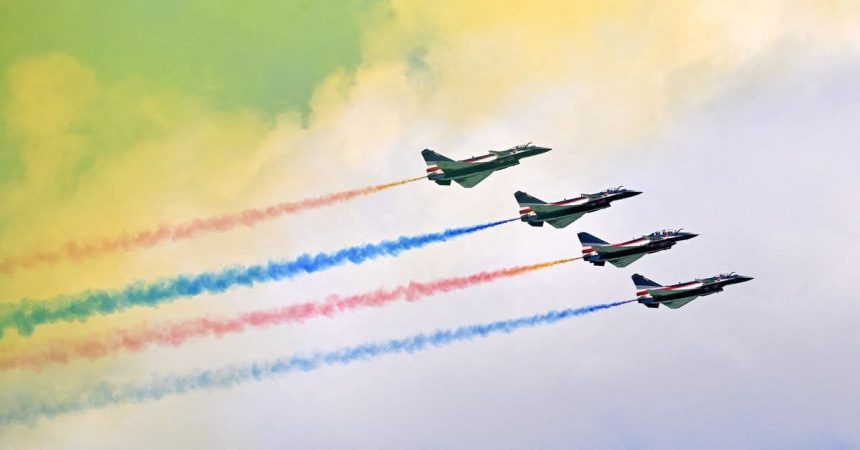
At the centre of attention was the debut appearance of the People’s Liberation Army Air Force Bayi Aerobatic Team flying Chengdu J 10C fighter jets. The aircraft gained international notice last year after an export version was used operationally by Pakistan. Chinese media reported the team flew directly to Singapore using mid air refuelling, a move widely viewed as a signal of improving power projection capabilities.
Inside the exhibition halls, Chinese state owned aerospace firms occupied prominent positions. A large scale model of the J 35A stealth multirole fighter drew crowds, with defence observers noting its potential appeal to countries unable or unwilling to acquire Western made stealth aircraft. Southeast Asian defence officials were seen engaging extensively with Chinese exhibitors, reflecting Beijing’s growing pull in the regional arms market.
While analysts caution against expectations of a sudden shift away from traditional suppliers, many agree that confidence among Chinese defence manufacturers is rising. Industry experts say the airshow highlighted a broader trend of diversification, as countries weigh multiple options amid changing geopolitical realities.
China also used the event to advance its commercial aviation ambitions. State planemaker COMAC flew the C919 narrow body jet and showcased a model of the proposed C929 wide body aircraft. Company representatives indicated that Southeast Asia remains a priority market, with delegates from several countries expressing interest.
Despite slow progress in global certification and the dominance of established manufacturers, China’s long term aim to challenge Airbus and Boeing was evident. Beyond aircraft sales, Chinese firms also promoted third party spare parts and support services, tapping into global supply chain pressures faced by airlines.
The Singapore Airshow underscored how China is combining military display and commercial outreach to reinforce its presence in Asia, at a moment when regional governments are reassessing security and economic partnerships in an increasingly uncertain world.