By Micah Jonah
February 16, 2026
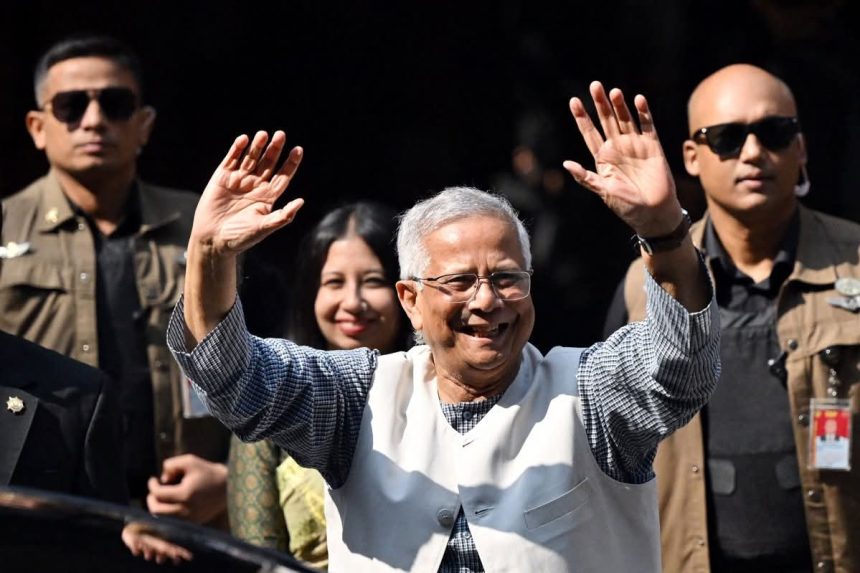
Bangladesh’s interim leader, Muhammad Yunus, on Monday formally announced his resignation, paving the way for a newly elected government to assume office following the country’s first general election since the 2024 mass uprising.
In a farewell nationwide broadcast, Yunus declared that the interims administration he headed “is stepping down,” urging citizens to safeguard democratic gains achieved during the transition period.
“But let the practice of democracy, freedom of speech, and fundamental rights that has begun not be halted,” he stated.
Yunus, an 85-year-old Nobel Peace Prize laureate, returned from self-imposed exile in August 2024 after a student-led uprising toppled the government of former Prime Minister Sheikh Hasina. He subsequently assumed office as chief adviser to oversee the country’s transition to democratic rule.
Bangladesh conducted general elections on February 12, 2026, with the opposition Bangladesh Nationalist Party (BNP) securing a landslide victory. The party, led by Tarique Rahman, won at least 212 of the 300 parliamentary seats, giving it a commanding majority.
The Jamaat-e-Islami party clinched 77 seats to emerge as the main opposition, while Hasina’s Awami League was barred from participating in the polls.
Rahman is expected to be sworn in as Prime Minister on Tuesday, according to local media reports. In his post-election remarks, he called for unity across political divides.
“Our paths and opinions may differ, but in the interest of the country, we must remain united,” he said.
Observers from the European Union described the elections as “credible and competently managed,” a position Yunus echoed while praising voters, political parties and electoral institutions for setting what he termed a benchmark for future elections.
In addition to electing new representatives, voters endorsed sweeping democratic reforms in a national referendum. The reform document, known as the “July Charter,” proposes term limits for prime ministers, the creation of an upper legislative chamber, enhanced presidential powers, strengthened judicial independence.
The charter, named after the month when the 2024 uprising began, is expected to bind parties that won the election, although ratification by the new parliament will still be required.
Political analysts note that the incoming administration faces the task of consolidating democratic gains while addressing governance, security and institutional reforms.
As Bangladesh turns a new chapter, Yunus expressed optimism that the foundations laid during the interim period would endure, stating that rebuilding institutions and setting reform in motion were central to the transition agenda.