Micah Jonah
February 13, 2026
African leaders are converging for the 2026 African Union summit with water security placed firmly at the centre of deliberations, amid growing fears that the continent may be heading towards intensified resource-based conflicts driven by climate change, scarcity and geopolitical rivalries.
The theme of this year’s summit focuses on water as a vital resource for life, development and sustainability. However, analysts warn that the issue goes far beyond environmental management and is increasingly intertwined with peace and security concerns across the continent.
Foreign policy analyst, Sanusha Naidu of the Institute for Global Dialogue described water as more than a humanitarian concern. According to her, it is fast becoming a climate change issue, a corporate access issue and, significantly, a security matter.
Across Africa, the impact of water-related shock is already evident. From destructive cyclones in Madagascar and rising disease outbreaks in flood-hit Mozambique, to drought and livestock deaths along the Kenya-Somalia border, climate extremes are worsening livelihoods and fuelling instability.
Experts say Africa is warming slightly above the global average, making it particularly vulnerable to floods, droughts and severe storms. Dhesigen Naidoo of the Institute for Security Studies noted that climate change is now primarily experienced as a water crisis, manifesting in both excess and scarcity.
He explained that too much or too little water ultimately produces the same outcome: diminished access, food insecurity, displacement and heightened risk of violence. In regions such as the Sahel and parts of northern Nigeria, analysts observe a troubling link between desertification, strained resources and armed group recruitment.
Water disputes are not limited to local tensions. Interstate disagreements are also intensifying, particularly over shared river basins. Over 90 percent of Africa’s surface water lies in transboundary basins requiring cooperation among countries.
The Nile River Basin remains one of the most sensitive flashpoints. Ethiopia’s construction and inauguration of the Grand Ethiopian Renaissance Dam on the Blue Nile has heightened tensions with downstream Egypt and Sudan, both heavily reliant on the Nile for survival. Observers note that the project has altered longstanding power dynamics in the basin.
Beyond the Nile, concerns have also been raised about upstream-downstream tensions in other regions, including the Niger River Basin, where diplomatic strains between Nigeria and its northern neighbours could complicate water governance.
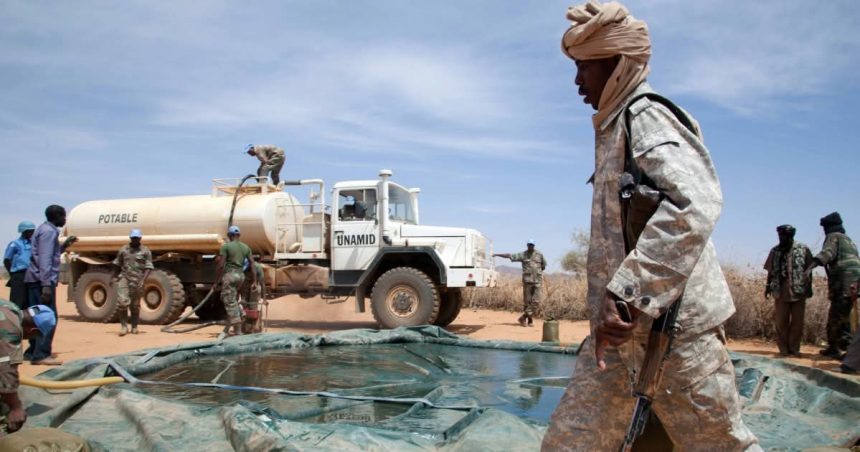
Security analysts further warn that water is increasingly being weaponised in conflict zones. In war-affected regions such as Sudan and Gaza, disruption of water supplies has deepened humanitarian suffering.
Urban centres are not immune. In South Africa, prolonged water shortages have sparked protests, with calls for the crisis to be declared a national disaster. Madagascar has also witnessed antigovernment protests linked to electricity and water service failures.
While the African Union is expected to issue a communiqué at the summit, experts caution that enforcement of continent-wide water agreements remains limited under the AU’s mandate.
Nevertheless, some analysts see hope in African-led innovation. Projects such as decentralized sanitation systems and alternative water distribution models in informal settlements demonstrate local capacity to respond creatively to scarcity challenges.
Experts insist that water security must now be treated as a non-negotiable social, economic and security priority. They warn that tolerance for poor service delivery in many parts of Africa cannot extend to water access.
Without urgent and coordinated action, analysts caution that what are currently resource pressures could escalate into broader instability, placing additional strain on already fragile regions.