By Micah Jonah
February 3, 2026
Donald Trump’s attempt to redirect American and Venezuelan crude oil exports to India as part of a broader trade agreement is facing stiff resistance from the realities of global oil market economics.
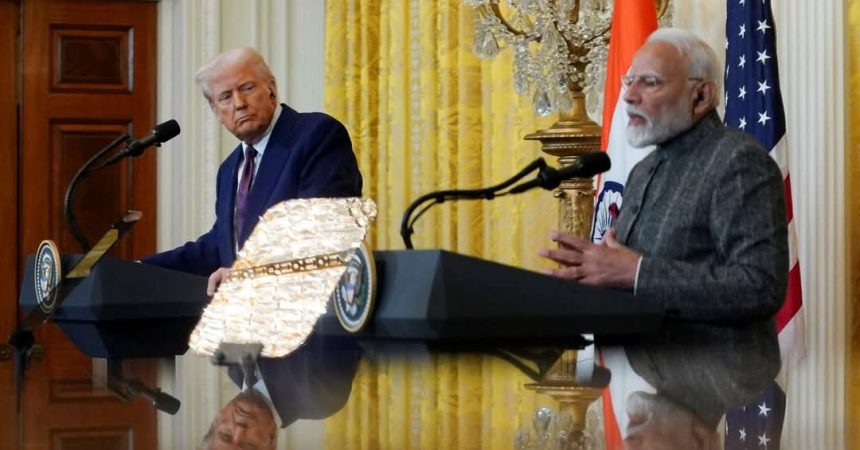
Trump and Indian Prime Minister, Narendra Modi announced the trade agreement on Monday after weeks of intense negotiations, although specific implementation details remain limited. Under the deal, the United States reduced tariffs on Indian goods to 18 percent from 25 percent, while India committed to purchasing over 500 billion dollars worth of American energy, technology, agricultural and industrial products.
As part of the agreement, India also pledged to significantly reduce its purchases of Russian crude oil and instead increase imports from the United States and potentially Venezuela.
India is the world’s third largest oil importer, however, analysts say the agreement advances Washington’s geopolitical objectives more than it aligns with market realities.
One major goal of the Trump administration is the revival of Venezuela’s oil sector following recent political changes in Caracas and Washington’s effective takeover of key aspects of the country’s oil administration. Another objective is to further squeeze Russian oil out of Asian markets, tightening economic pressure on Moscow amid the ongoing Ukraine conflict.
However, experts say oil markets respond to price signals, not political directives.
Venezuela’s crude production currently stands at about 900,000 barrels per day and will require significant time and investment to recover fully. Although exports rose sharply in January, large volumes remain in storage, output remains constrained.
More importantly, Venezuelan oil only gained traction in Asian markets when it was sold at deep discounts due to sanctions. Recent offers of Venezuelan heavy crude at modest discounts failed to attract buyers, as refiners found the pricing uncompetitive compared to alternative grades.
Unless Venezuela dramatically increases production and is forced to offer deeper discounts, Asia is expected to remain a marginal destination for its oil exports.
Similarly, India is unlikely to become a major buyer of US crude in the near term. High freight costs and limited control by Washington over private market dynamics make large scale shifts impractical. Last year, India imported an average of just 320,000 barrels per day of US oil, a relatively small volume compared to its overall demand.
Despite diplomatic pressure, Russian crude continues to hold strong appeal for Indian refiners due to heavy price discounts. Russia remains one of India’s largest suppliers, accounting for over one fifth of total imports in January.
Although Indian imports of Russian oil have declined from 2025 levels, analysts say flows are unlikely to disappear entirely. Russian crude is currently being offered at discounts exceeding 20 dollars per barrel compared to global benchmarks, making it difficult for price sensitive buyers to walk away.
While refiners exporting to Europe may limit their exposure due to regulatory restrictions, those serving India’s domestic market continue to face strong incentives to purchase discounted Russian oil.
Ultimately, market fundamentals are expected to prevail.
The United States may wield significant political, economic influence, but global oil flows are governed by supply, demand and pricing. In a transparent and highly liquid oil market, price signals will determine where barrels end up, not political ambition.