RismadarVoice Reporters
February 1, 2026
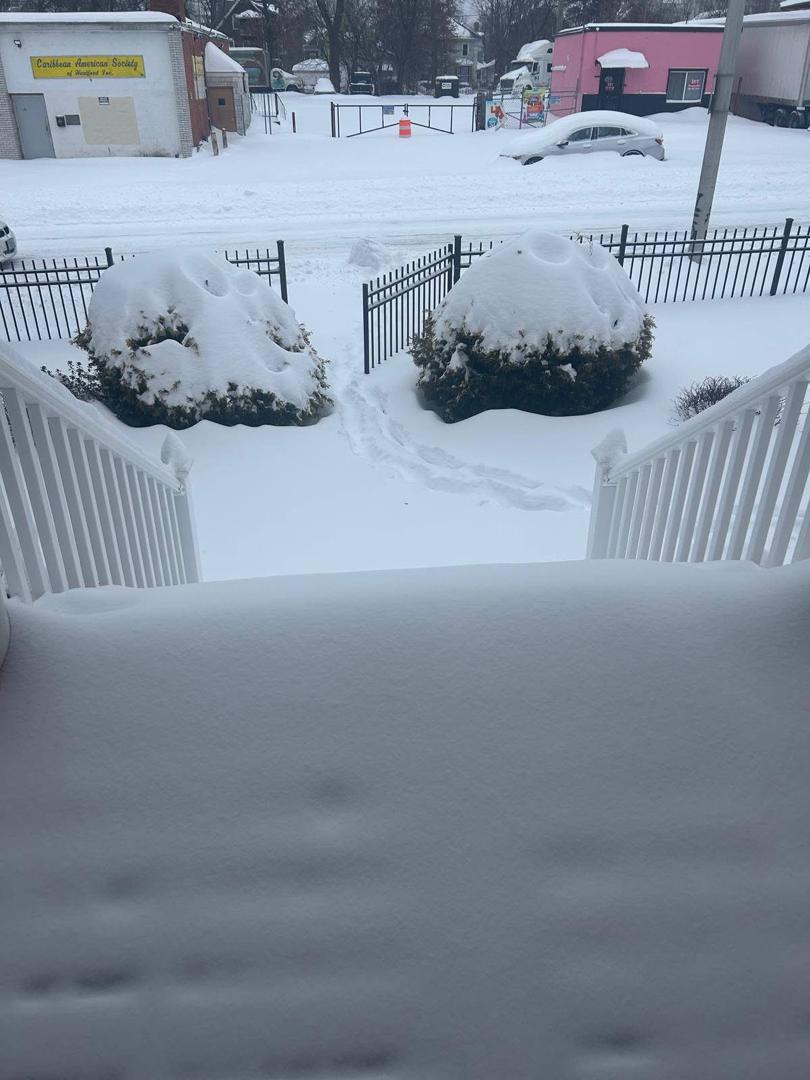
Travel disruption continued across the southern United States on Sunday as a powerful snowstorm battered states unaccustomed to severe winter weather, bringing heavy snowfall, dangerous road conditions, and subzero temperatures.
The latest storm struck barely a week after a massive winter system swept across much of the country, killing more than 100 people and leaving numerous communities struggling to recover from snow and ice.
On Saturday, heavy snow blanketed North Carolina and neighboring states, prompting authorities to urge residents to stay off the roads. Winter storm warnings were issued for all of North and South Carolina, as well as parts of Georgia, eastern Tennessee, Kentucky, and southern Virginia.
Coastal areas also faced threats, with officials warning that oceanfront structures were at risk.
North Carolina Highway Patrol reported about 750 car crashes on Saturday alone. Snowfall totals were significant across the region, with Faust, North Carolina, recording 14.5 inches (37 cm), West Critz, Virginia, receiving 12.5 inches, and Harrisburg, Tennessee, seeing more than nine inches.
In Cape Carteret, North Carolina, strong winds sent thick snow blowing sideways, leading the National Weather Service (NWS) to warn that travel conditions were “treacherous and potentially life-threatening,” particularly for stranded motorists.
Dramatic police footage from Gastonia, North Carolina, showed a train slamming into a semi-truck stuck on railroad tracks, crushing the vehicle. Authorities confirmed that no one was injured.
Air travel was heavily affected. More than 1,800 flights were cancelled over the weekend at Charlotte Douglas International Airport, a major hub for American Airlines, according to FlightAware. Airport officials said a 300-member snow team was working to clear runways, taxiways, roads, and sidewalks.
At Atlanta’s Hartsfield-Jackson International Airport, the world’s busiest, more than 600 flights were cancelled Saturday, with additional cancellations reported early Sunday.
The National Weather Service warned that an “explosively deepening coastal cyclone” would continue to bring heavy snow, strong winds, and possible blizzard conditions across the Carolinas. Forecasters also said an intense surge of Arctic air behind the storm would push freezing temperatures as far south as South Florida by Sunday morning.
Temperatures plunged to extreme lows, with Davis, West Virginia, recording minus 28°F (minus 33°C) — the coldest temperature in the lower 48 states on Saturday.
Power outages were widespread, with about 156,000 customers still without electricity early Sunday, mostly in southern states. Mississippi, Tennessee, and Louisiana were the hardest hit, according to poweroutage.us.
In North Carolina, the National Park Service closed campgrounds and some beaches along the Outer Banks, citing threats to oceanfront structures and dangerous conditions. A key highway running through the dunes was also shut down.
In Mississippi, Governor Tate Reeves said the U.S. Army Corps of Engineers assisted in installing generators at critical facilities, while authorities opened 79 shelters and warming centers statewide.
The extreme cold also affected space operations. NASA postponed a key fueling test of its 322-foot (98-meter) rocket at Cape Canaveral, Florida. The delay is expected to push back a planned manned Moon flyby scheduled for later this month.