By Micah Jonah
January 22, 2026
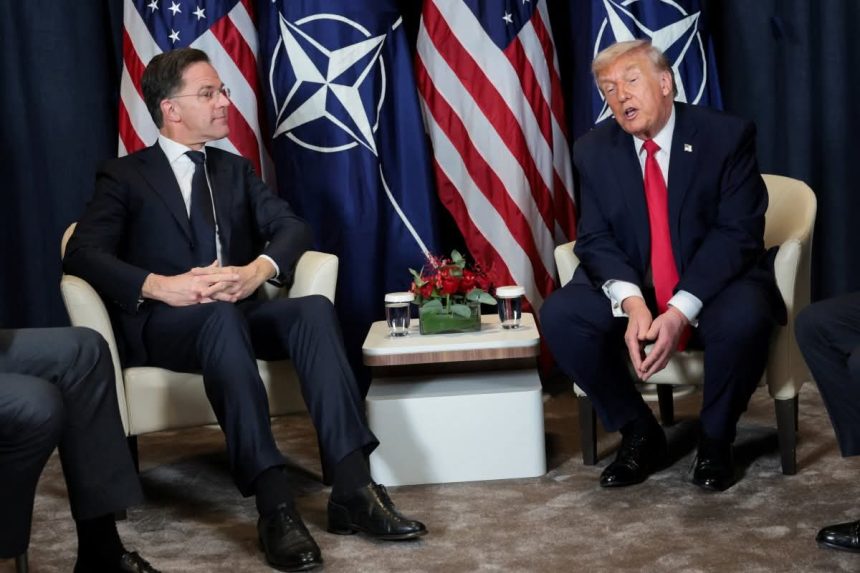
NATO member countries are expected to significantly increase security efforts in the Arctic, following a new framework agreement reached with United States President, Donald Trump over Greenland, according to NATO Secretary General, Mark Rutte.
Rutte made the disclosure at the World Economic Forum in Davos, Switzerland, after meeting with Trump amid growing tensions between Washington and its European allies over the future of Greenland, a semi autonomous territory of Denmark and a strategically important Arctic location.
He said NATO commanders would meet to determine what military and surveillance measures are required to strengthen security in the Arctic region, adding that implementation could begin as early as 2026.
Rutte expressed confidence that even NATO members without direct Arctic borders would contribute to the effort, stressing that expanding Arctic security would not reduce support for Ukraine in its ongoing war with Russia.
Trump had in recent weeks threatened economic penalties against European countries opposing his push to gain control over Greenland, raising concerns about the stability of the transatlantic alliance. However, during his Davos appearance, the US president dropped proposed tariffs and ruled out the use of force, saying he and Rutte had agreed on a cooperative framework for the Arctic and Greenland.
Trump also revealed that discussions were underway regarding Greenland’s role in the United States Golden Dome missile defence programme, a large scale space based system aimed at intercepting advanced missile threats. He did not provide details on how Greenland would be involved.
Rutte said mineral resource development on the island was not discussed during his meeting with Trump and that negotiations on economic cooperation would continue separately between the United States, Denmark and Greenland.
Denmark’s Prime Minister, Mette Frederiksen responded by stating that while her government was open to discussions on security and economic cooperation, Denmark’s sovereignty over Greenland was not negotiable.
She said Arctic security should be addressed collectively by NATO and confirmed she had been in regular contact with Rutte before and after his talks with Trump. Frederiksen said she had been informed that sovereignty was not part of the discussions between NATO and the US president.
Frederiksen added that Denmark was willing to cooperate on Arctic defence initiatives, including potential involvement in the Golden Dome programme, as long as such cooperation respected Danish territorial integrity.
In an interview with US media, Rutte declined to say whether Greenland would remain under Danish sovereignty under the new framework, stating only that Trump was focused on protecting the Arctic from increasing Russian and Chinese activity rather than territorial control.
A NATO spokesperson later clarified that no proposals affecting sovereignty were made during the Davos meeting and that future talks between Denmark, Greenland and the United States would focus on preventing foreign military or economic influence on the island.
Germany also welcomed the shift in tone from Washington. Chancellor Friedrich Merz said European nations should strengthen Arctic defence cooperation while preserving core principles of sovereignty and territorial integrity.
He described Arctic security as a shared transatlantic interest, said NATO must protect northern regions from Russian threats while maintaining strong diplomatic relations among allies.
Despite Trump backing away from tariffs and military threats, European leaders remain cautious about future policy changes from Washington. Reports indicate that European Union leaders are considering reassessing aspects of their relationship with the United States amid uncertainty over long term US commitments.
Greenland’s strategic location along emerging Arctic shipping routes and its proximity to Russia have made it increasingly important in global security planning, particularly as climate change opens new navigation and resource access opportunities in the region.