

By Micah Jonah
January 22, 2026
Guinea Bissau’s transitional authorities have announced that presidential and legislative elections will be held on December 6, 2026, following last year’s military coup that disrupted the country’s electoral process and removed the sitting President from office.
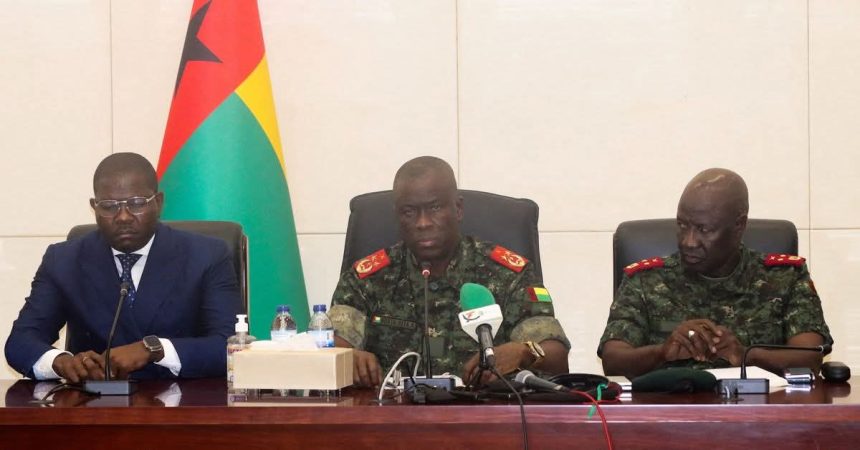
The election date was confirmed through a presidential decree signed on Wednesday by interim leader Major General Horta Inta a, who assumed power after the army overthrew President Umaro Sissoco Embalo in late 2025.
The coup occurred just one day before the national electoral commission was scheduled to announce results from a highly contested vote. Armed soldiers, operating under the name Military High Command, seized control of key government institutions and declared the removal of Embalo from office.
The following day, the military installed Major General Horta Inta a as transitional President, citing the need to restore stability and reorganize the political process.
The takeover was strongly criticized by the Economic Community of West African States, which demanded a return to constitutional order and called for the continuation of the election process. However, Guinea Bissau’s electoral commission later said it was unable to finalize the vote after armed men confiscated ballot materials and destroyed computer servers containing election data.
Officials said the scale of the disruption made it impossible to reconstruct the results or resume the process.
Since assuming power, the transitional government has pledged to organize new elections and restore civilian rule, though no specific timetable had previously been announced. The December 2026 date now provides the first formal schedule for a return to elected leadership.
Guinea Bissau has a long history of political instability marked by repeated coups, military interference in politics and weak civilian institutions. International partners have repeatedly urged reforms to strengthen democratic governance and limit the role of the armed forces in state affairs.
It remains unclear whether all political parties will be permitted to participate freely in the upcoming elections or what safeguards will be in place to prevent renewed military in the process.
Regional observers say the coming months will be critical in determining whether the transition leads to credible elections or deepens uncertainty in one of West Africa’s most fragile political systems.