By Micah Jonah
January 22, 2026
Thailand’s reformist People’s Party has emerged as the frontrunner ahead of the country’s February 8 general election, according to recent opinion polls, marking a strong return for a political movement that was previously blocked from forming government and later dissolved by court order.
The party, which rose from the remnants of the Move Forward Party, is currently leading national surveys with support estimated between 30 and 34 percent, well ahead of the ruling Bhumjaithai Party and the populist Pheu Thai Party, both of which formed alliances to block the progressives after the 2023 election.
People’s Party leaders say voter support is being driven by more detailed policy proposals and a shift toward presenting a full governing team, including experts from diplomacy, law and business, as potential cabinet members. Party officials say this approach is aimed at convincing undecided voters that the party is ready to govern.
Despite leading in the polls, the party still faces major obstacles. To secure a clear majority in the 500 seat parliament, it must win at least 250 seats, a target that analysts say will be difficult even if current momentum continues.
The campaign is also unfolding against a backdrop of rising nationalist sentiment following a recent border dispute with Cambodia, which conservative parties are using to challenge the People’s Party’s reform agenda.
In addition, the party faces possible legal action linked to earlier efforts by its predecessor to amend the royal insult law, a move that could result in the suspension of several members and possible bans from political office.
The original Move Forward Party won the most seats in the 2023 election but was blocked by a military appointed Senate from forming a government. A court later ordered the party dissolved, ruling that its attempt to amend laws protecting the monarchy posed a threat to the democratic system. Party leaders regrouped and launched the People’s Party within hours of that ruling.
This election cycle, party leaders have moderated their stance on sensitive issues, including dropping proposals to amend the royal insult law and adopting a softer tone toward the military, while focusing more on economic reforms, anti corruption measures and public service delivery.
However, the inclusion of external technocrats in leadership positions has caused internal disagreements, with some long standing members complaining that loyal party workers were overlooked. One former lawmaker recently resigned, criticizing the growing influence of outside professionals.
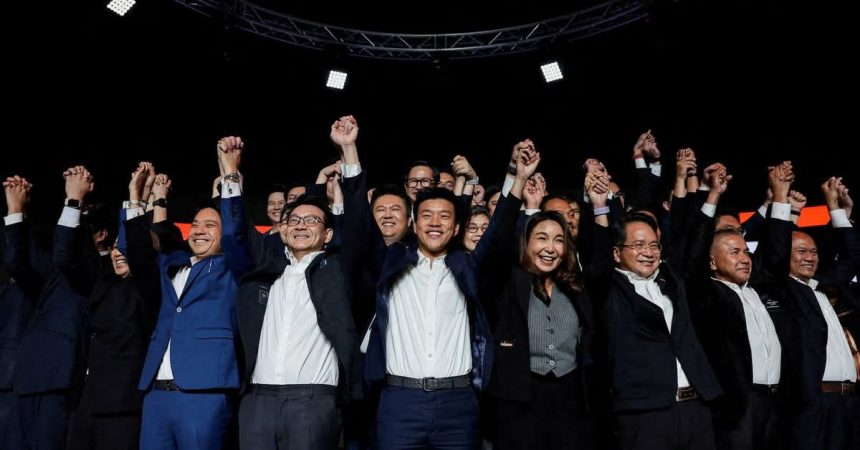
The People’s Party formally introduced its team of advisers and potential ministers at a campaign rally earlier this month, presenting them as an alternative governing team to those proposed by the ruling party, which has also named senior technocrats and diplomats as potential cabinet members.
Political analysts say the strategy could help the reformist party attract middle class urban voters while also giving it more flexibility in post election coalition negotiations if no party wins an outright majority.