


By Micah Jonah
January 19, 2026
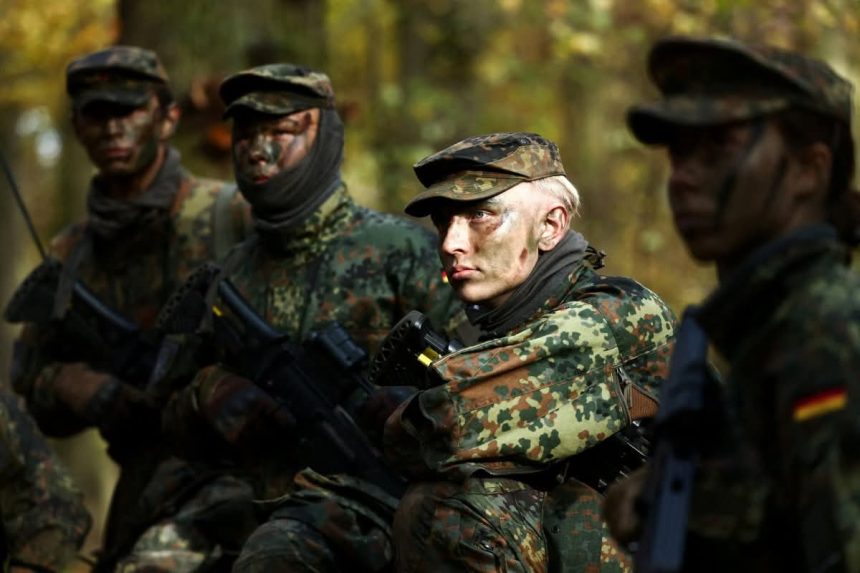
Germany has commenced major military reforms, aimed at building what its government describes as Europe’s strongest conventional army, amid rising security concerns linked to the Russia-Ukraine war and growing uncertainty over long term United States military support for Europe.
Under a new law passed in December, German men turning 18 are now required to complete compulsory military fitness registration, a move seen as laying the groundwork for possible future conscription if voluntary recruitment fails to meet national defence targets.
Although military service remains voluntary for now, the German government says it is prepared to introduce mandatory enlistment if necessary to achieve its goal of expanding the armed forces to 260,000 active duty personnel by 2035, alongside doubling its reservist strength to 200,000.
Chancellor Friedrich Merz earlier told parliament that Germany must develop the strongest conventional army in Europe, citing increased threats from Russia, instability within the NATO security framework.
As of November 2025, Germany’s active military strength stood at about 184,000 troops, representing the highest level recorded in recent years. The government has also introduced attractive financial incentives, offering recruits salaries of about 2,600 euros monthly, alongside free accommodation and healthcare benefits, to encourage voluntary enlistment.
Germany has equally committed to spending over 108 billion euros on defence in 2026, representing about 2.5 percent of its Gross Domestic Product, with plans to raise military spending to 3.5 percent of GDP by 2030.
Russian authorities have expressed concern over Germany’s military buildup, with Moscow accusing Berlin of preparing for possible confrontation. However, German officials maintain that the reforms are purely defensive, necessary to safeguard European security.
Public opinion in Germany has also shifted significantly, with recent polls indicating growing support for increased defence spending and stronger European military independence, particularly as trust in US security guarantee continues to decline under the current American administration.
Many Germans now favour the development of a European based defence structure, including nuclear deterrence capabilities led by France and the United Kingdom, rather than relying solely on NATO’s traditional US leadership.
Security analysts warn, however, that while funding has increased, bureaucratic delays, industrial capacity challenges and recruitment hurdles could slow down full implementation of Germany’s ambitious military expansion plans.
Nevertheless, the German government insists the reforms are necessary to secure Europe’s future, deter aggression and reduce dependence on external powers, marking a significant shift in post World War II European defence strategy.