By Micah Jonah
January 17, 2026
Israeli attacks have killed at least three Palestinians in Gaza in what Palestinian officials describe as continued violations of the fragile ceasefire, even as a new Palestinian technocratic committee met in Cairo to discuss governance arrangements under the second phase of a United States backed peace plan.
Those killed on Friday
included a 10year old girl, a 16year old boy, an elderly woman, according to Palestinian medical and local media sources. The incidents occurred as members of the proposed governance committee gathered in the Egyptian capital to begin preparations for managing civilian affairs in Gaza.
The Palestinian news agency Wafa reported that 16year old Mohammad Raed al Barawi was shot dead by Israeli forces in Beit Lahiya in northern Gaza. The agency said he was hit in the head, died instantly. Earlier, it reported that 62year old Sabah Ahmed Ali Abu Jamea was killed by gunfire from Israeli military vehicles, west of Khan Younis in southern Gaza, where Israeli forces were carrying out demolition operations.
Medical sources also said a 10year old girl was wounded by an Israeli drone strike in Beit Lahiya and later died at al Shifa Hospital after arriving in critical condition.
In 24hours leading up to Friday afternoon, at least 15 Palestinians were reported killed, including six members of two families whose homes were bombed in Deir el Balah on Thursday evening. Israel later said it had killed Muhammad al Hawli, whom it described as a commander in the Qassam Brigades, the armed wing of Hamas, adding that it had struck several targets across the Gaza Strip.
Hamas spokesman, Hazem Qassem said the group considered the latest strikes a new violation of the ceasefire agreement. Gaza authorities say at least 463 Palestinians have been killed since the ceasefire took effect on October 10. Israel has reported the deaths of three soldiers during the same period.
As fighting continued, the newly formed National Committee for the Administration of Gaza met in Cairo for the first time. The committee is expected to oversee day to day governance in Gaza under international supervision as part of the second phase of President Donald Trump’s multi phase peace initiative.
Ali Shaath, an Engineer and former deputy minister in the Palestinian Authority, said the committee was created to address urgent humanitarian and administrative needs. Speaking to Egypt’s state television, he said Palestinians had been waiting for the committee to begin work to help stabilize conditions and support recovery efforts.
Shaath said he believe reconstruction could take about three years, but United Nations suggests it may take at least seven years just to clear the rubble, even if fuel and heavy machinery are allowed into the territory without interruption. Large parts of Gaza remain inaccessible, with Israeli forces still controlling more than half of the strip beyond what is known as the yellow line.
Uncertainty also remains over how and when Israeli forces will withdraw further from Gaza, how the issue of Hamas disarmament will be handled. Disarmament is a key element of the peace plan, but Hamas has so far rejected laying down its weapons.
Despite this, Hamas welcomed the formation of the technocratic committee, describing it as a positive step and indicating a willingness to hand over administrative responsibilities. Analysts say this may reflect a temporary understanding between Hamas and the Palestinian Authority after years of political rivalry.
President Trump has continued to press for Hamas to disarm, warning the group that it must comply with the terms of the agreement, return the remains of the last Israeli captive without delay.
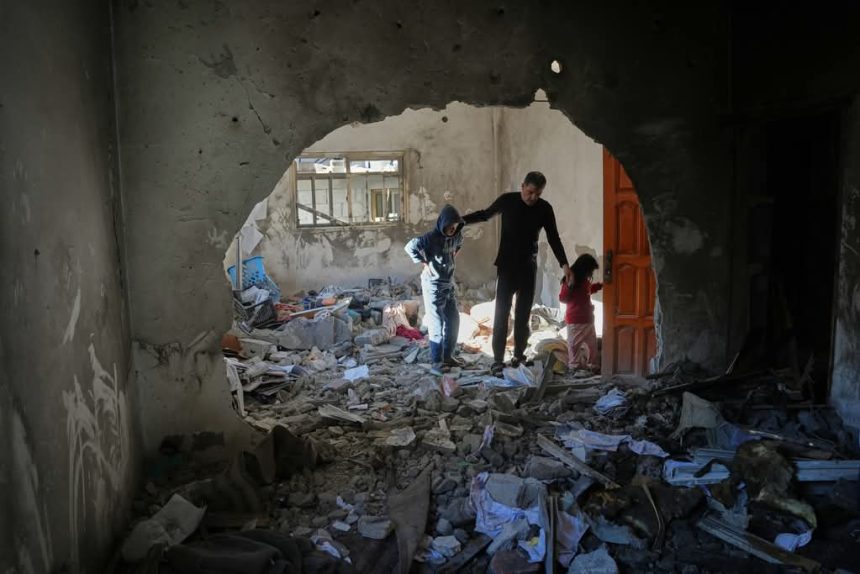
From Gaza City, residents expressed skepticism that political developments would quickly improve their living conditions. Hundreds of thousands remain displaced and are sheltering in makeshift camps during the winter, with limited access to food, clean water and medical services.
For many, daily survival remains the priority, while diplomatic negotiations and phased agreements are seen as distant and uncertain, offering little immediate relief from ongoing violence and humanitarian hardship.