RismadarVoice Reporters
January 13, 2026
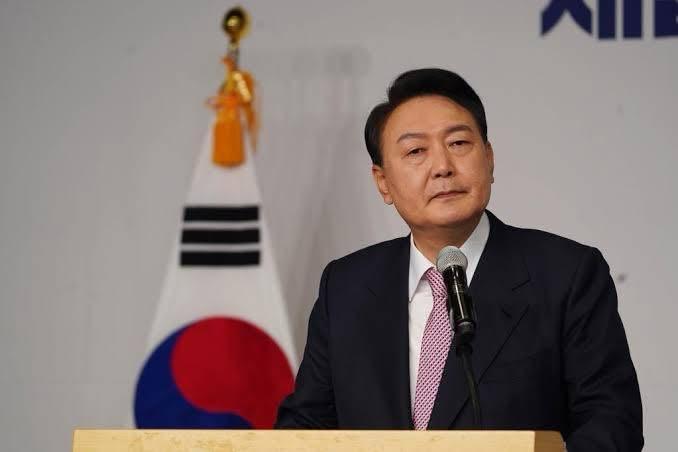
South Korean prosecutors are expected on Tuesday to seek either life imprisonment or the death penalty for former president Yoon Suk Yeol, who is accused of leading an insurrection after declaring martial law more than a year ago.
Yoon plunged the country into a political crisis in December 2024 when he announced the suspension of civilian rule and ordered troops to the National Assembly to enforce the declaration.
The move failed following swift resistance, and Yoon was later detained in January, becoming the first sitting South Korean president to be taken into custody.
His criminal trial, which includes charges of insurrection, abuse of power, and related offences, is now drawing to a close, with prosecutors set to formally request sentencing.
Under South Korean law, a conviction for insurrection requires prosecutors to seek either the death penalty or life imprisonment, regardless of whether executions are ultimately carried out.
Yoon’s defence team has mounted an unusually dramatic closing argument, comparing the disgraced former leader to historical figures such as Galileo Galilei and Giordano Bruno, whom they described as individuals wrongfully condemned by prevailing opinion.
“The majority does not always reveal the truth,” the defence argued in court.
Proceedings were initially expected to conclude last Friday but were postponed after more than 15 hours of deliberations, including lengthy evidence reviews. A significant portion of the delay was attributed to testimony involving former defence minister Kim Yong-hyun, one of the co-defendants, whose lawyer cited difficulty in reading prepared submissions.
The trial involves eight defendants accused of being central figures in the attempted imposition of martial law, including Yoon and Kim.
If convicted, Yoon would become the third South Korean president found guilty of insurrection, following two former military leaders convicted in connection with a 1979 coup.
However, even if a death sentence is imposed, it is widely viewed as unlikely to be carried out, as South Korea has observed an unofficial moratorium on executions since 1997.
Separately, prosecutors are seeking a 10-year prison sentence for Yoon on obstruction of justice charges, with a verdict in that case expected from a Seoul court on Friday.
Yoon is also facing an additional trial over allegations that he ordered drone flights over North Korea, accusations prosecutors say were intended to heighten tensions and justify the declaration of martial law.