By Micah Jonah
January 12, 2026
The United States military operation that captured Venezuelan President Nicolas Maduro was designed not only to upend power in Caracas but also to send a clear warning to China to keep its distance from the Western Hemisphere, U.S. officials said.
For more than two decades, Beijing has expanded its footprint across Latin America, leveraging economic investments, infrastructure projects and energy financing to establish strategic influence close to Washington’s borders. The operation in Venezuela, according to U.S. officials, was intended to blunt that advance.
China’s growing presence, ranging from satellite tracking facilities in Argentina to port investments in Peru and deep financial ties with Venezuela, has long unsettled successive U.S. administrations.
Officials said the Trump administration viewed the removal of Maduro as a direct strike against Beijing’s regional strategy, particularly its practice of exchanging loans for discounted Venezuelan oil.
President Donald Trump made the message explicit in remarks to oil executives, saying the United States did not want China or Russia operating as close geopolitical neighbors in the Americas. He said Washington would instead offer China access to U.S. oil markets rather than allowing it to anchor influence through sanctioned states.
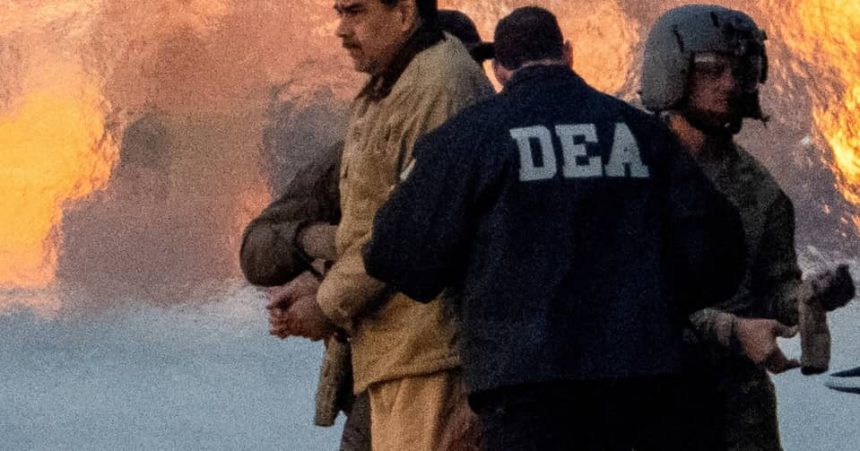
The January 3 raid, carried out in the early hours of the morning, saw U.S. commandos sweep into Caracas and detain Maduro and his wife. U.S. officials said the operation disabled air defense systems supplied by China and Russia and resulted in the diversion of tens of millions of barrels of Venezuelan oil previously bound for Chinese ports.
Analysts said the operation dealt a blow to Beijing’s prestige and exposed the limits of China’s power projection in the region.
The raid highlighted the gap between China’s global ambitions and its actual ability to protect partners in the Western Hemisphere, said Craig Singleton of the Foundation for Defense of Democracies. He said Beijing could lodge diplomatic protests but lacked the capacity to counter direct U.S. military pressure.
China rejected the U.S. action, with its embassy in Washington condemning what it described as unilateral, illegal behavior. A spokesperson said China would continue cooperation with Latin American and Caribbean countries regardless of shifting political conditions.
The White House declined public comment, though administration officials said China should be reassessing its vulnerability in the region as partners increasingly recognize Beijing’s limited protective reach.
The episode comes amid a broader and often contradictory U.S. approach towards China under Trump, combining trade concessions with increasingly assertive military and diplomatic posturing.
The timing of the operation further embarrassed Beijing. Just hours before the raid, Maduro had met publicly with China’s special envoy for Latin America in Caracas, a move U.S. officials said suggested Beijing had been caught off guard.
For years, China poured billions of dollars into Venezuela’s oil infrastructure, provided military funding and equipment, including radar systems promoted as capable of detecting advanced U.S. aircraft. U.S. officials said those systems proved ineffective during the raid.
Security analysts said the operation has triggered reassessments among countries relying on Chinese defense technology, raising doubts about its effectiveness against U.S. military capabilities.
China is now examining how its systems failed during the operation, according to sources familiar with intelligence assessments.
Beyond Venezuela, Washington continues to challenge Beijing’s influence across the region, including concerns over Chinese intelligence activity in Cuba and port operations near the Panama Canal. U.S. officials said pressure remains on Chinese companies operating in strategic transit zones.
While China appears weakened in the short term, analysts cautioned that prolonged instability or deeper U.S. military involvement in Venezuela could eventually allow Beijing to reinsert itself diplomatically and economically.
Former U.S. diplomat, Daniel Russel warned that a shift toward a spheres of influence mindset could ultimately benefit China, particularly if Washington becomes entangled in prolonged regional conflicts.