By Micah Jonah
January 8, 2026
Following the abduction of Venezuelan President, Nicolas Maduro last week, the Trump administration has indicated plans to quickly restore Venezuela’s oil production and expand its mining sector.
“You have steel, you have minerals, all the critical minerals, they have great mining history that’s gone rusty,” U.S. Commerce Secretary, Howard Lutnick said aboard Air Force One. “President Trump is going to fix it and bring it back.”
Oil Reserves:
Venezuela holds the largest proven oil reserves in the world, estimated at 303 billion barrels in 2023, more than five times the reserves of the United States. The bulk of these reserves lies in the Orinoco Belt, a vast region in eastern Venezuela spanning 55,000 square kilometers, controlled by state-owned oil company PDVSA.
The Orinoco crude is extra-heavy, dense, and viscous, making extraction more challenging and expensive than conventional crude. It typically trades at a discount compared to lighter, sweeter crudes such as U.S. shale oil. Advanced refining capabilities in the United States, particularly in Texas and Louisiana, are required to process this crude efficiently.
Venezuela’s oil exports historically made it a major supplier to the United States, delivering up to 2 million barrels per day in the late 1990s and early 2000s. Production has since declined due to political instability, PDVSA mismanagement, lack of investment, and U.S. sanctions. In 2024, Venezuela produced an average of 952,000 barrels per day.
China has been the largest buyer of Venezuelan crude for over a decade. In November 2025, prior to the U.S. military blockade, Venezuela exported 952,000 barrels per day, of which 778,000 barrels, 81.7 percent, went to China. The U.S. accounted for 15.8 percent of exports, with Cuba importing nearly 2.5 percent.
Natural Gas:
Venezuela ranks ninth globally for natural gas reserves, with approximately 5.5 trillion cubic meters, 195 trillion cubic feet, reported in 2023. Around 80 percent of its gas production is a byproduct of oil extraction.
Gold and Mining:
Venezuela holds the largest official gold reserves in Latin America, totaling roughly 161.2 metric tonnes, valued at more than 23 billion dollars. The country also possesses vast untapped mineral resources, including diamonds, nickel, coltan, and copper.
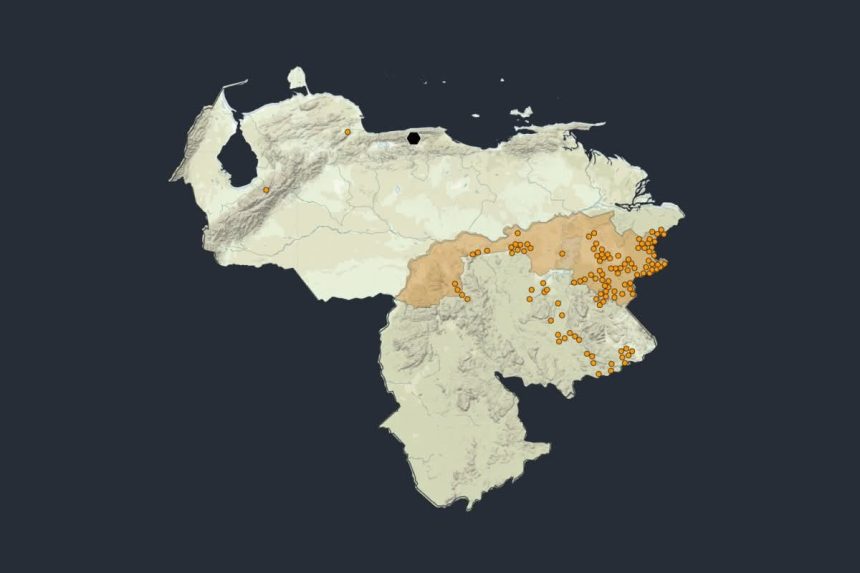
The Orinoco Mining Arc, announced by former President Hugo Chavez and expanded under Maduro, designates 12 percent of the country for mining. Several foreign investment deals were signed under Maduro’s Gold Plan, but many failed to materialize, leaving large areas under the control of non-state armed groups. Estimates suggest the country may hold at least 644 metric tonnes of gold, though actual quantities are likely higher.
Other Mineral Resources:
Venezuela’s mineral wealth includes
Coal: 3 billion metric tonnes
Iron ore: 14.68 billion metric tonnes, of which 3.6 billion are proven
Nickel: 407,885 metric tonnes
Bauxite: 99.4 million metric tonnes
Diamonds: 1,020 million carats in the Orinoco Mining Arc, 275 million carats in Guanaimo
Venezuela’s combination of oil, gas, gold, and other strategic minerals makes it one of the most resource-rich countries in the world, highlighting why foreign powers are closely watching developments in the country.
Venezuela’s ability to restore production and fully exploit these resources will be a key factor in regional energy and mineral markets in the coming months.