

By RismadarVoice Reporters
January 5, 2026
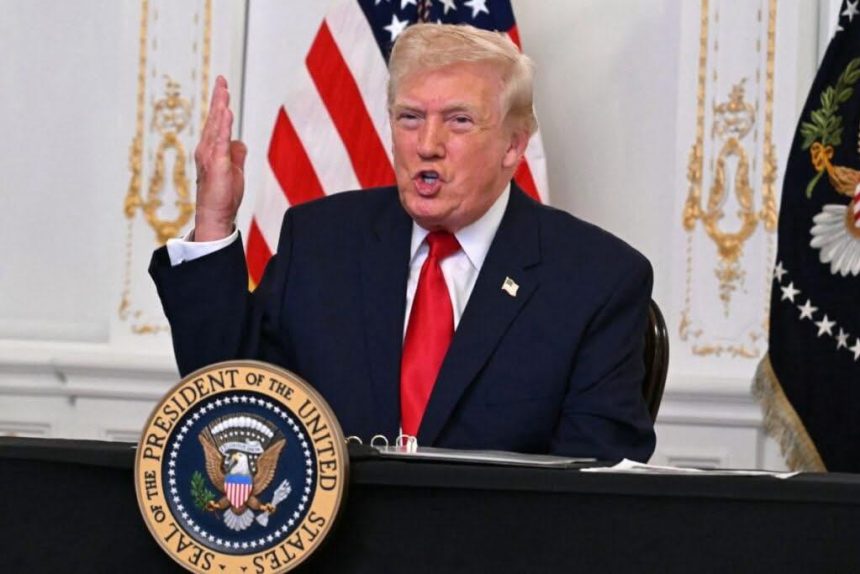
President Donald Trump’s assertion that the United States is now “in charge” of Venezuela is set to be underscored on Monday as the country’s deposed leader, Nicolás Maduro, appears before a federal court in New York.
Maduro, 63, is facing narcotrafficking-related charges, alongside his wife, following a dramatic U.S. operation carried out on Saturday. The operation reportedly involved special forces, air strikes, and a significant U.S. naval presence off Venezuela’s coast.
At Venezuela’s request, the UN Security Council is scheduled to convene an emergency session on Monday, providing a platform for international scrutiny of Washington’s actions in the oil-rich nation of about 30 million people.
Despite growing global concern, Trump appeared undeterred, declaring late Sunday:
“We’re in charge.”
In a possible diplomatic breakthrough for Washington, Delcy Rodríguez, Maduro’s successor and interim leader, softened her earlier rhetoric and issued a statement offering cooperation with the United States.
“We extend an invitation to the U.S. government to work together on an agenda for cooperation,” Rodríguez said.
Her statement followed earlier threats from Trump, who warned she would pay a “very big price, probably bigger than Maduro,” if she had resisted U.S. demands.
Asked what Washington expected from the interim government, Trump said the U.S. required “total access,” including access to Venezuela’s oil resources, which he said would enable efforts to rebuild the country.
Although there are no confirmed U.S. ground forces remaining inside Venezuela, American officials say a substantial naval force, including an aircraft carrier, continues to operate offshore.
The Trump administration maintains that it is exerting economic pressure by blocking Venezuelan oil exports, while the president has not ruled out further military action.
No Regime Change For Now.
The future political direction of Venezuela remains uncertain after nearly 25 years of left-wing rule under Maduro and his late predecessor, Hugo Chávez.
U.S. Senate Democratic leader Chuck Schumer said Americans were “scratching their heads in wonderment and in fear” over the unfolding situation.
The White House insisted on Sunday that it is not seeking broad regime change, rather Maduro’s removal and the installation of a cooperative government, even if populated by figures from his former inner circle.
Secretary of State Marco Rubio said Washington was not pursuing sweeping reforms or an immediate return to democracy.
“We’re going to make an assessment on the basis of what they do,” Rubio told CBS News.
The U.S. position has sidelined Venezuela’s opposition, which Washington claims was denied victory in recent elections. Opposition leader Edmundo González Urrutia said the intervention was “important” but insufficient without the release of political prisoners and recognition of his claimed victory in the 2024 election.
International Backlash.
Several countries with close ties to Maduro’s government including China, Russia, and Iran have swiftly condemned the U.S. operation. Some American allies, including the European Union, also expressed alarm.
China called for Maduro’s “immediate release,” describing the U.S. action as a “clear violation of international law.”
Colombian President Gustavo Petro denounced the operation as an “assault on Latin American sovereignty” and warned it could trigger a humanitarian crisis.
By contrast, Italy and Israel, whose leaders are strong allies of Trump, voiced support for Washington’s actions.