By RismadarVoice
January 5, 2026
The unfolding controversy surrounding the strike and capture of Venezuelan President Nicolas Maduro has exposed deep fractures in the global order and revived long standing questions about power, responsibility and the relevance of international institutions.
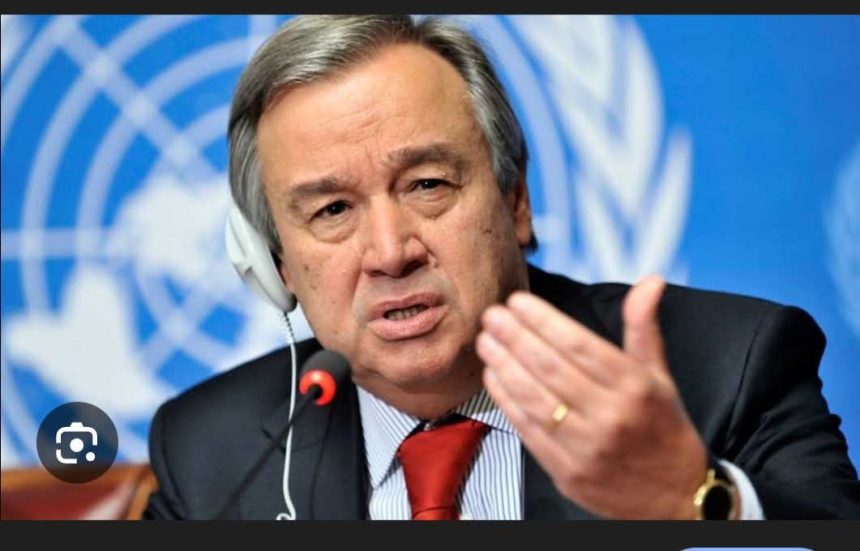
United Nations Secretary General Antonio Guterres has condemned the action, describing it as a dangerous precedent that threatens international stability. In sharp contrast, Argentine President Javier Milei welcomed the development, calling it excellent news. These opposing reactions reflect a wider global divide over intervention, sovereignty and accountability.
To understand the present moment, history offers important lessons. The United Nations itself was born out of failure. Before it, the League of Nations was created in the aftermath of the First World War, a conflict in which European powers nearly destroyed themselves. It ultimately took the intervention of the United States to bring that war to an end.
The League of Nations was proposed by the then President of the United States as a mechanism to prevent future global wars. However, due to America’s policy of isolationism at the time, the United States never joined the League. This absence proved fatal. When Adolf Hitler embarked on his aggressive expansion, the League of Nations stood helpless, issuing condemnations without enforcement. The result was the Second World War.
Once again, it took the intervention of the United States to defeat the alliance of Imperial Japan, Fascist Italy under Benito Mussolini, and Nazi Germany. The devastation of the Second World War finally ended in 1945, and from its ashes emerged the United Nations. This time, the United States became a full member, committing itself to preventing wars of such magnitude in the future.
From that point onward, America became the backbone of the United Nations, its largest financier and the ultimate guarantor of global security. This historical reality explains why the United States often acts as the world’s police. The League of Nations failed largely because America ended the war and chose to stay away. The lesson learned was clear. Power vacuums invite chaos.
Yet decades later, the United Nations itself has fallen short of its founding ideals. Across the world, countless citizens remain trapped under oppressive regimes whose leaders hide behind the shield of sovereignty to abuse, imprison and kill their people. In most cases, the United Nations responds with statements, resolutions and condemnations that carry little consequence. Strong sanctions are rare. Accountability is weaker still.
In this sense, the United Nations has come to resemble the League of Nations before it. A body heavy on rhetoric but light on enforcement. A global institution that barks loudly but rarely bites.
Against this backdrop, the actions of United States President Donald J Trump have taken on a different meaning for many around the world. While controversial, his approach reflects a willingness to act where international institutions hesitate. To millions living under repression, decisive action matters more than diplomatic language.
In the harsh reality of global politics, ideals without power achieve little. Where institutions fail, power steps in. Whether applauded or condemned, that is the vacuum President Trump is filling.
For many of the oppressed across the globe, the uncomfortable truth is this. A decisive actor, however imperfect, may offer more hope than a paralyzed institution. In today’s world, that reality has placed the United States, and its president, at the center of global justice in ways the United Nations has so far been unable or unwilling to achieve.