

By Anamati Inyang
December 28, 2025
Airbus is heading into 2026 with rising delivery expectations, expanding single aisle production and key programme milestones, even as supply chain constraints continue to test its industrial system.
From investor briefings and earnings calls, the European aircraft manufacturer has made it clear that the production ramp up is ongoing.
However, 2026 is shaping up to be a decisive year that will reveal how resilient Airbus’ manufacturing and supplier networks truly are.
Aircraft deliveries approach 900 Airbus delivered 766 commercial aircraft in 2024 and was initially guided for around 820 deliveries in 2025.
That target was later revised downward to around 790 following a fuselage panel quality issue that affected parts of the A320neo programme.
Despite the adjustment, Airbus management has insisted that the long term production trajectory remains unchanged.
During the third quarter 2025 earnings call, analysts questioned whether Airbus could achieve a double digit increase in deliveries in 2026.
Investor commentary and industry estimates now point to a working assumption of roughly 900 aircraft deliveries next year, with some projections reaching as high as 1,000.
Even at the lower end of those estimates, Airbus would extend its lead over Boeing in annual deliveries, continue progressing toward record narrow body production levels later in the decade.

A320neo family remains central to growth
The A320neo family will remain the backbone of Airbus’ output in 2026.
The manufacturer has repeatedly reaffirmed its plan to increase A320 family production to 75 aircraft per month by 2027, up from about 60 aircraft per month currently.
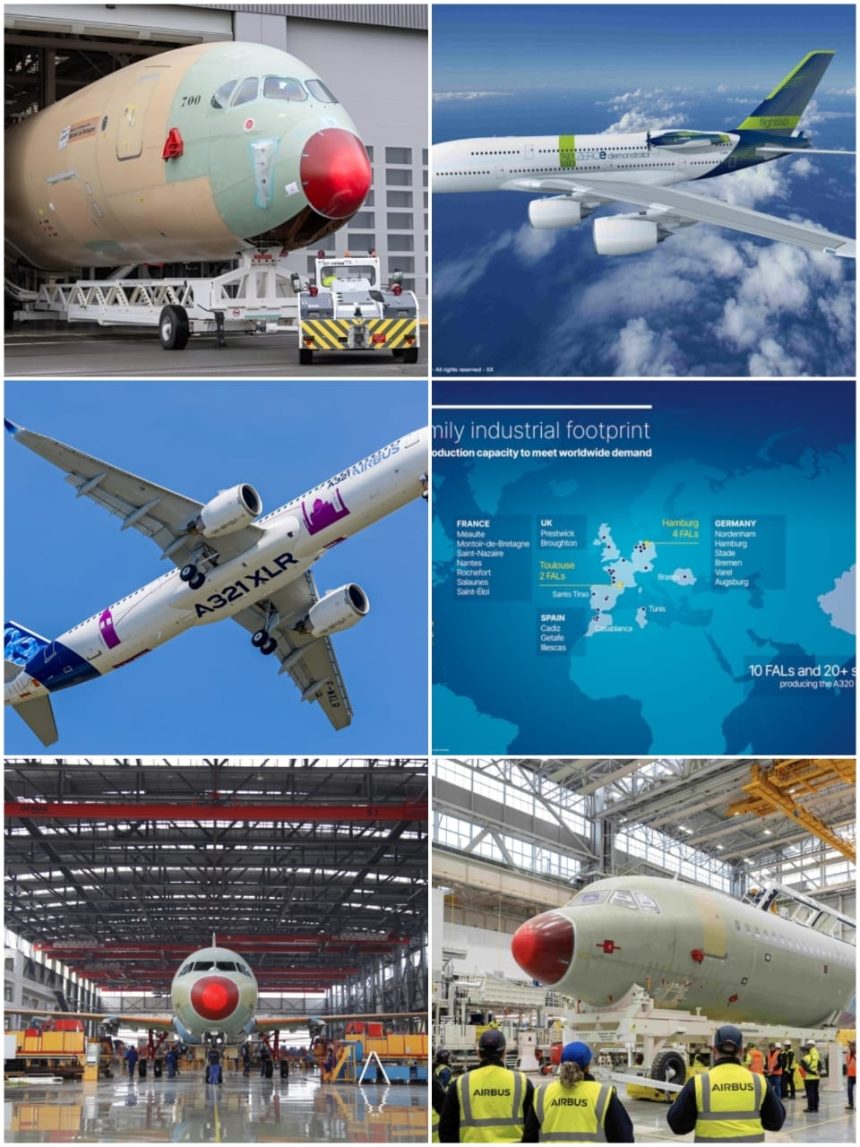
To support this target, Airbus is expanding capacity across its global final assembly network.
A second A320 family assembly line in Tianjin, inaugurated in October 2025, is expected to become fully operational in early 2026.
In Toulouse, a former A380 assembly line is being repurposed into a second A321 capable line, with completion targeted for mid 2026.
Chief Executive Officer Guillaume Faury has described 2026 as another year of gradual progress rather than a sharp increase in output.
Constraints related to engines, aero structure, cabin equipment are expected to persist, reinforcing Airbus’
message that production is moving toward 75 aircraft per month in 2027, rather than reaching that level in 2026.
For airlines, the impact is expected to be felt in improved availability. While order books remain heavily backlogged, incremental increases in A320 family production could begin to slightly reduce delivery lead times.
A321XLR enters first full year of operations
By 2026, the A321XLR is expected to transition from entry into service to routine operational deployment. Airbus has already started delivering production aircraft to customers, setting the stage for its first full year in airline fleets.
Several airlines are planning to use the aircraft to open new routes, increase capacity. IndiGo is scheduled to receive its first A321XLR at the end of 2025 and plans to launch six weekly nonstop services from Delhi and Mumbai to Athens from January 2026.
The move reflects growing interest in long thin routes, particularly in high growth markets.
Qantas is also expected to have multiple A321XLRs in service by the end of 2026.
The aircraft will feature higher seating capacity and upgraded cabins compared with the airline’s Boeing 737 800 fleet, enabling more efficient use of constrained domestic and short haul international routes.
Airbus has positioned the A321XLR as a key contributor to margins, noting that the long range variant typically attracts higher pricing, more customer options.
The programme also strengthens Airbus’ dominance in the upper end of the single aisle market.
A220 growth continues at a measured pace.
The A220 programme remains strategically important for Airbus, however continues to face challenges.
Supply chain and cost pressures, particularly among engine and aerostructure suppliers, have led the manufacturer to adopt a more cautious production ramp.
Spirit AeroSystems, a major supplier to the A220 and A350 programmes, has reported forward losses linked to both aircraft types, highlighting ongoing financial, operational strain within the supplier base.
Despite these challenges, Airbus expects the A220 programme to continue growing into 2026, albeit at a slower pace than originally planned.
As Airbus moves into 2026, higher delivery targets, expanding single aisle production, new aircraft entering service underline its growth ambitions.
At the same time, persistent supply chain issues suggest that the coming year will be a critical test of how effectively the company can balance demand, production, industrial stabilizes