By RismadarVoice Media
December 28, 2025
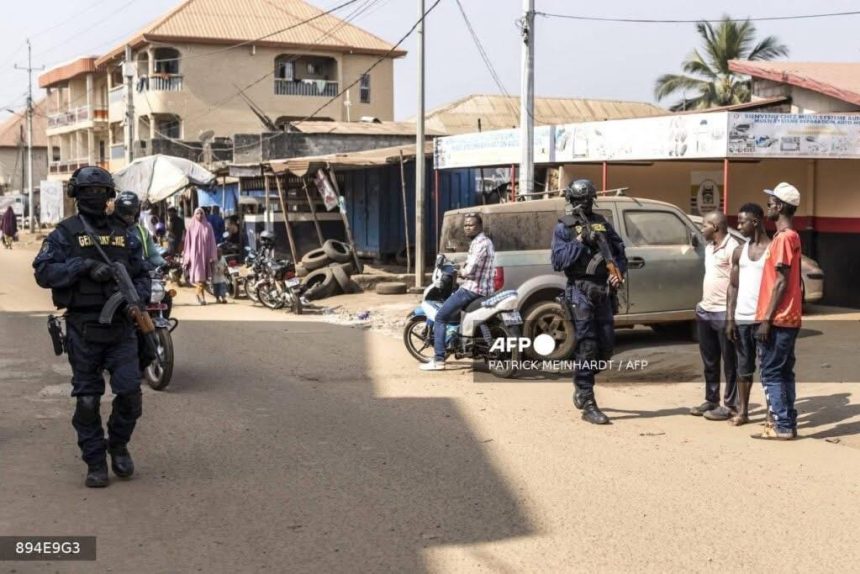
Guineans go to the polls on Sunday in a presidential election widely expected to deliver victory to junta leader Mamady Doumbouya, four years after he seized power in the West African nation through a military coup.
Doumbouya, a general who overthrew President Alpha Condé in September 2021, is running as an independent candidate, reversing an earlier pledge not to contest elections and to restore civilian rule by the end of 2024.
The vote has drawn sharp criticism from opposition groups, international observers, who say the electoral process has been marred by repression and the exclusion of key political rivals.
All major opposition leaders have been barred from contesting the election, prompting calls for a boycott.
United Nations High Commissioner for Human Rights, Volker Türk, said on Friday that the campaign was “marked by intimidation of opposition actors, apparently politically motivated enforced disappearances, and constraints on media freedom.”
Guinea’s opposition has urged voters to shun the polls in the mineral-rich country, where 52 per cent of the population lives in poverty, according to World Bank data.
A total of 6.8 million registered voters are eligible to choose among nine candidates, including the 41-year-old Doumbouya. With his remaining rivals largely unknown. Analysts say he is likely to win outrightly in the first round.
Polls close at 1800 GMT, with provisional results expected within 48 hours, according to the General Directorate of Elections.
Political analysts argue that the election represents a return to authoritarian rule.
Gilles Yabi, founder of the West African think tank Wathi, said Guinea has reverted to a pattern of governance it has known for much of its post-independence history.
“With the main opposition absent, this election does not allow for a free choice among voters, aims to consolidate Doumbouya’s power,” Yabi said.
In September, Guinea approved a new constitution in a referendum boycotted by the opposition.
The constitution permits members of the ruling junta to run for office, extends presidential terms from five to seven years, renewable once, changes that cleared the path for Doumbouya’s candidacy.
Opposition leader and former prime minister Cellou Dalein Diallo, who is among those barred from contesting, described the vote as an “electoral charade” designed to legitimize what he called the “confiscation of power.”
Diallo and two other prominent figures, former President Alpha Condé and ex-Prime Minister Sidya Touré, were excluded under residency and age provisions of the new constitution.
Despite political tensions, Guinea has maintained strong relations with France, other international partners, unlike neighbouring Mali, Burkina Faso, and Niger, which are also under military rule.
In campaign messages circulated on social media, Doumbouya highlighted infrastructure projects, pledged to fight corruption, and pointed to the launch of operations at the Simandou iron ore mine as evidence of economic progress.
However, Analysts say questions remain about governance, accountability after the vote.
The election, which coincides with general elections in the Central African Republic, caps a year of contentious polls across Africa – marked by restrictions on opposition and extended rule by entrenched leader