




By RismadarVoice Media
December 23, 2025
The Nigerian Bar Association (NBA) has expressed deep concern over controversies trailing the recently enacted Tax Reform laws, warning that the unfolding issues cast serious doubt on the integrity, transparency, credibility of Nigeria’s lawmaking process.
The controversy erupted last week after a member of the House of Representatives, Mr Abdulsamad Dasuki, alleged discrepancies between the versions of the tax laws passed by the National Assembly and those subsequently gazetted. According to him, the gazetted laws do not reflect what lawmakers debated, approved on the floor of the House.
In a statement issued on Tuesday, signed by its President, Mr Afam Osigwe, SAN, the NBA described the development as one that strikes at the very heart of constitutional governance, raising fundamental questions about the procedural sanctity of Nigeria’s democratic legislative process.
“The Nigerian Bar Association considers it imperative that a comprehensive, open, transparent investigation be conducted to clarify the circumstances surrounding the enactment of the laws and to restore public confidence in the legislative process,” the Association stated.
The NBA further called for an immediate suspension of all plans to implement the Tax Reform Acts, pending the conclusion of such an investigation.
“Until these issues are fully examined and resolved, all plans for the implementation of the Tax Reform Acts should be immediately suspended,” the statement added.
According to the Association, the legal, policy uncertainty generated by the controversy carries far-reaching consequences, including the disruption of the business environment, erosion of investor confidence, heightened unpredictability for individuals, businesses and institutions expected to comply with the laws.
The NBA warned that such uncertainty is inimical to economic stability and fundamentally incompatible with governance anchored on the rule of law.
It stressed that Nigeria’s constitutional democracy demands that laws, especially those with profound economic, social implications, must emerge from transparent, accountable and verifiable processes.
“We therefore call on all relevant authorities to act swiftly and responsibly in addressing this controversy, in the overriding interest of constitutional order, economic stability and the preservation of the rule of law,” the Association concluded.
The Tax Reform Acts, comprising the Nigeria Tax Act, Nigeria Tax Administration Act, Nigeria Revenue Service Act, and Joint Revenue Board Act, are scheduled to take effect on January 1, 2026.
However, the alleged discrepancies have ignited widespread public debate, with growing calls for their suspension.
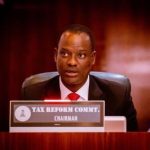
In response to the allegations, the Presidency and the Chairman of the Presidential Fiscal Policy and Tax Reforms Committee, Mr Taiwo Oyedele, have maintained that no officially harmonized version of the passed bills currently exists for direct comparison, further complicating efforts to verify the claims.
Meanwhile, the National Assembly has constituted a committee to investigate the matter, although its findings are not expected until after lawmakers resume from their end-of-year recess.