By RismadarVoice Media
December 21, 2025
Since President Bola Tinubu assumed office in May 2023, the Federal Government has approved at least N10.897 billion for direct insurance coverage, a review of Federal Executive Council (FEC) decisions and presidential directives has revealed.
The funds cover federal workers, critical airport infrastructure, other public sector liabilities.
Analysis of FEC approvals shows that the largest single insurance authorization occurred on January 17, 2024, when N9.8 billion was approved for the renewal of the Group Life Assurance Scheme, covering all federal employees.
The Minister of Information and National Orientation, Mohammed Idris, explained that the approval followed a memo from the then Head of the Civil Service of the Federation, Dr. Folasade Yemi-Esan.
“There are about 12 insurance companies involved. It’s a regular annual coverage that insurance companies give workers. So, in the event of death or severe injury, they can resort to the policy, and their families would not have to suffer,” Idris said.
The life assurance package was allocated to 12 Nigerian insurance firms to manage coverage for civil servants exposed to occupational hazards.
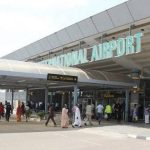
The second major insurance approval came on March 3, 2025, when the Council approved N1.097 billion for an insurance package, covering critical assets, personnel of the Federal Airports Authority of Nigeria (FAAN).
Minister of Aviation and Aerospace Development, Festus Keyamo, said the decision was necessary to meet International Civil Aviation Organisation certification benchmarks.
“We cannot continue to run our airports without insurance cover,” he said, noting that five Nigerian insurers would underwrite the risk, with Leadway Assurance as lead underwriter.
Beyond direct premium approvals, the Tinubu administration has introduced sweeping health insurance reforms through the National Health Insurance Authority (NHIA).
On September 3, 2025, President Tinubu directed the Secretary to the Government of the Federation, George Akume, to issue a circular – compelling all Ministries, Departments, and Agencies (MDAs) to enrol employees under the NHIA scheme, in line with the NHIA Act of 2022.
“All MDAs must enrol their employees in the NHIA plan. Entities participating in procurement must show valid NHIA certificates,” presidential spokesman Bayo Onanuga said.
The President has also restructured leadership in the insurance sector.
In April 2024, Halima Kyari was appointed Chairperson of the National Insurance Commission Board, with Olusegun Omosehin as Commissioner for Insurance, other technocrats as deputy commissioners.
Tinubu charged the board to “exercise utmost probity and protect policyholders while improving trust in the sector.”
In March 2025, former Senator, Ibrahim Oloriegbe was appointed Chairman of the NHIA.
Tinubu has promised to extend financial protection to millions of Nigerians without insurance through initiatives such as micro-insurance, mobile airtime-based policy purchases, and blockchain-enabled distribution, though costs for these programmes have not been disclosed.
Insurance penetration in Nigeria remains low at an estimated 3.3 per cent, according to the World Bank and National Insurance Commission, meaning fewer than four in every 100 Nigerians have any form of insurance cover.
Experts attribute the low penetration to weak enforcement of compulsory insurance laws, fake insurance certificates, low public trust, limited awareness of risk-pooling benefits.
Low penetration has also constrained the industry’s ability to mobilize long-term funds for economic growth, shifting the burden of compensation for deaths, accidents, and disasters onto families, government rather than insurers.
However, former Director-General of the Nigerian Insurers Association, Mrs. Yetunde Ilori, said the industry is now capable of handling more risks, settling claims promptly. “Yes, the insurance industry has the ability to carry any risk,” she said, noting that weak claims settlement in the past led to expulsion of erring firms, some of which later lost their licences.
Ilori highlighted that digital verification tools have significantly reduced fake insurance certificates, particularly for motor, marine, and group life policies.

“Everything is now uploaded onto central platforms. Enforcement Agencies use the Nigeria Insurance Industry Database to ascertain the genuineness of the cover presented to them,” she explained.
According to the Nigerian Insurers Association, insurers paid around N622 billion in claims in the 2024 financial year, with non-life insurers accounting for N437 billion and life insurers N185 billion.