By RismadarVoice Reporter
December 7, 2025
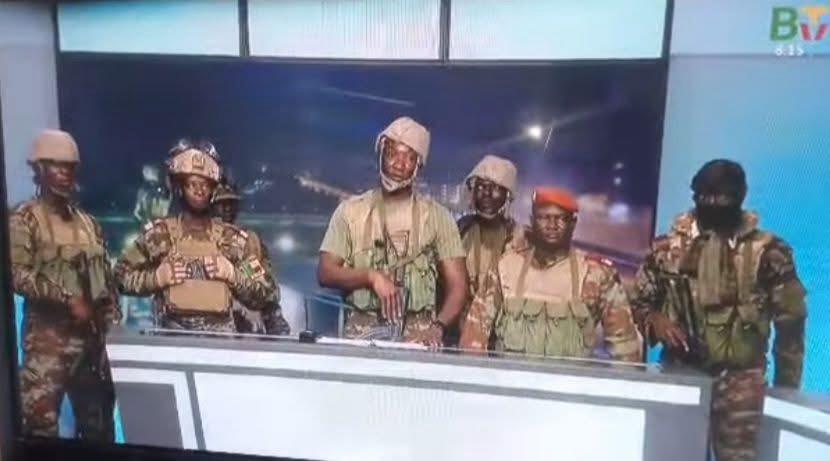
Reports from Beninese media indicate that a coup d’état has been unfolding in Cotonou since dawn on Sunday, December 7, 2025. According to TchadOne, President Patrice Talon’s residence in the Le Guézo neighbourhood was attacked by military personnel led by Lieutenant Colonel Pascal Tigri.
Later, Tigri appeared on national television, reportedly under military control, declaring himself “chairman of the military re-establishment committee.”
The situation in the capital remains extremely volatile, with reports of troop movements at strategic locations.
No official statement has been issued by President Talon or his government, leaving citizens and observers in suspense.
This unfolding crisis is not an isolated incident. West Africa has, in recent years, been gripped by a troubling wave of coups, exposing the fragility of democratic institutions across the region.
•In Guinea-Bissau, army generals seized power in November 2025, detaining President Umaro Sissoco Embaló and suspending elections, citing threats to national stability.
•Mali remains under military rule after the 2020 and 2021 coups, with political parties banned, elections postponed indefinitely, and repeated threats of internal destabilization amid jihadist violence.

•Burkina Faso, led by Captain Ibrahim Traoré since 2022, recently faced a foiled coup allegedly supported by terrorist groups, highlighting persistent internal divisions and insecurity.

•Niger, following the July 2023 coup, continues under military rule after President Mohamed Bazoum was detained by his own presidential guard, showing how even peaceful democratic transitions remain vulnerable.
These events raise urgent, uncomfortable questions:
•Are West African democracies failing at their most fundamental promise, the peaceful transfer of power?
•What role do internal fractures, corruption, economic hardship, and external influence play in fueling these repeated military takeovers?
• How long can citizens’ voices and popular will survive in the shadow of armed interventions?
The coup in Benin, coming on the heels of similar upheavals, underscores a chilling reality: democracy in West Africa is under siege, and regional stability hangs in the balance.
As troops consolidate control in Cotonou and the world watches, one truth becomes starkly clear: the fragility of governance is not a distant threat, it is a daily reality.
Unless institutional resilience, accountability, and citizen empowerment are urgently prioritized, coups may continue to redefine the political landscape of the region, leaving generations to inherit uncertainty, fear, and unrest.