RismadarVoice Reporters
November 3, 2026
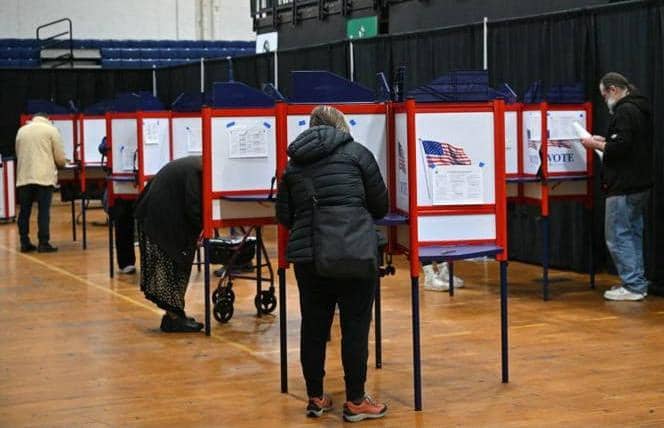
Americans are voting in closely contested midterm elections that could change control of Congress and determine the extent of President Donald Trump’s political influence during the remaining two years of his second term.
All 435 seats in the House of Representatives, 35 Senate seats and governorships in 36 states are being contested in Tuesday’s elections.
Republicans currently control both chambers of Congress, holding 53 Senate seats and a narrow majority in the House.

Democrats need a net gain of three House seats and four Senate seats to secure majorities in both chambers.
A Democratic-controlled House could challenge Trump’s legislative agenda and launch investigations into his administration, while Senate control would influence confirmation of judicial nominees and senior government appointments.
The elections come amid public concerns over rising living costs, tariffs, fuel prices and the continuing war with Iran.
Republicans have defended the administration’s tax and immigration policies, arguing that they will strengthen the economy and national security.
Democrats, meanwhile, have focused their campaigns on affordability, government accountability and the consequences of Trump’s economic and foreign policies.
More than 57 million Americans had voted early by Monday, according to figures cited by Reuters from the University of Florida Election Lab.
The election is also expected to be exceptionally expensive, with nonpartisan watchdog OpenSecrets estimating total political spending at approximately $11.9 billion.
Several Senate contests are attracting national attention, including races in Michigan, Alaska, Texas, Kansas, Iowa and Ohio.
In Michigan, Democratic Representative Haley Stevens endorsed Republican candidate Mike Rogers after losing her party’s Senate primary to Abdul El-Sayed, exposing divisions within the Democratic Party.
Election-related legal disputes have also attracted scrutiny.
A federal judge dismissed a Justice Department lawsuit seeking to restrict certification of Alaska’s Senate election results under certain circumstances.
Separately, the Supreme Court rejected an emergency request by the Trump administration concerning more than 20,000 mail-in ballots in California.

The legal developments have intensified discussions about election administration and the handling of disputed results.
Trump, who has campaigned extensively for Republican candidates, has urged supporters to treat the elections as a referendum on his presidency.
Voting is continuing across multiple time zones, with polling stations scheduled to close at different times throughout Tuesday evening.
Outcomes in closely contested races could take longer to establish as officials process ballots and complete vote counts.