RismadarVoice Reporters
October 20, 2026
Nigeria has been selected by the Gulf of Guinea Commission (GGC) to spearhead the development of a regional Marine and Blue Economy Policy aimed at strengthening maritime security, sustainable ocean governance and economic cooperation among member states.
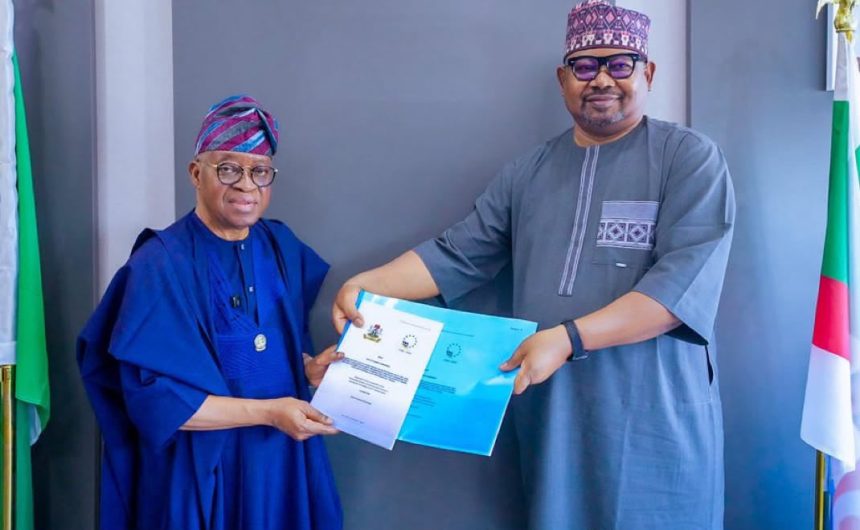
The assignment will be coordinated by Nigeria’s Minister of Marine and Blue Economy, Dr Adegboyega Oyetola, as part of efforts to establish a common framework for managing and developing the region’s vast maritime resources.
The Commission’s Deputy Executive Secretary, Ambassador Obinna Agbugba, announced the decision during a meeting in Abuja on behalf of the Executive Secretary, José Mba Abeso.

Agbugba commended Oyetola for his role in developing Nigeria’s National Policy on Marine and Blue Economy, describing the country’s experience as a useful foundation for formulating a coordinated regional strategy.
According to the Commission, the proposed policy will promote cooperation among Gulf of Guinea countries in addressing maritime insecurity, protecting marine ecosystems and expanding economic opportunities associated with ocean resources.
The initiative is also expected to encourage greater coordination in fisheries management, maritime transportation, environmental protection and sustainable exploitation of marine resources.
Responding to the assignment, Oyetola expressed appreciation to the Commission for the confidence placed in Nigeria, describing the development as an opportunity to strengthen regional partnerships.
He emphasised the importance of collective action in addressing challenges affecting the Gulf of Guinea, including maritime security threats, environmental degradation and inadequate coordination in the management of shared resources.
The minister proposed the establishment of a Steering Committee to coordinate the policy development process, engage relevant stakeholders and ensure that the interests of participating countries are adequately represented.
The proposed committee is expected to provide strategic direction and facilitate consultations among government institutions, maritime authorities and other organisations involved in the blue economy.
Nigeria’s participation comes amid growing efforts to diversify economic activities through marine transportation, fisheries, aquaculture, coastal tourism and related industries.

The Gulf of Guinea remains an important maritime corridor for international trade and energy transportation, making effective cooperation among coastal states essential to regional economic stability.
The proposed policy is intended to move beyond individual national initiatives by establishing shared priorities and coordinated approaches to managing the region’s marine resources.
Oyetola maintained that stronger collaboration would help participating countries maximise economic opportunities while safeguarding the marine environment for future generations.
The development process is expected to involve consultations with relevant stakeholders before a regional framework is finalised and considered for adoption by member states.