RismadarVoice Reporters
September 9, 2026
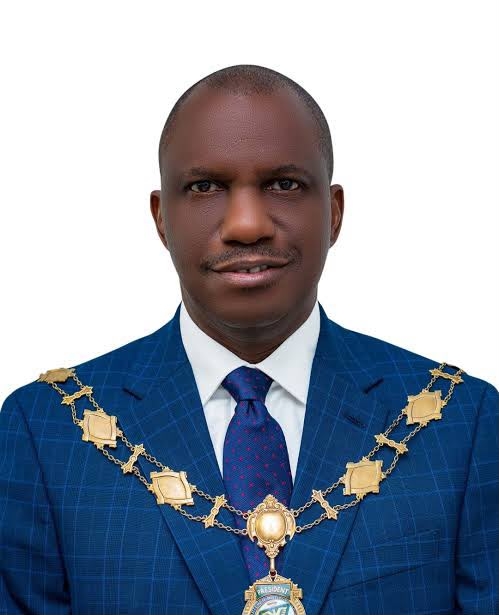
Nigeria’s improving macroeconomic indicators will have limited meaning unless they translate into lower living costs, more jobs, higher incomes and improved living standards for citizens, the President and Chairman of the Council of the Chartered Institute of Bankers of Nigeria (CIBN), Dele Alabi, has said.
Mr Alabi spoke on Tuesday at the opening of the 19th Annual Banking and Finance Conference of the CIBN in Abuja.
He said the ultimate measure of the country’s economic reforms should be their impact on households, businesses and the everyday lives of Nigerians.

According to him, stronger economic fundamentals are important milestones but should not be regarded as the final destination.
“They are milestones, not the destination. The true test is whether stronger fundamentals translate into lower living costs, more jobs, higher real incomes, affordable credit, reliable public services and reduced poverty,” he said.
Mr Alabi said macroeconomic improvements must be reflected at the household and business levels, particularly among ordinary Nigerians and small businesses.
He added that the next phase of the economic reform programme should focus on ensuring that the benefits of macroeconomic stability reach businesses and households.
The CIBN president said the conference was organised to advance the institute’s IMPACT Vision, which he unveiled after assuming office in May.
He said the institute’s advocacy for the development of scalable small and medium enterprise hubs across the country was designed to address some of the major challenges confronting micro, small and medium enterprises (MSMEs).
These challenges, he said, include high operating costs, inadequate infrastructure, limited market access, low productivity, skills shortages and slow adoption of digital technology.
Also speaking at the conference, the World Bank’s Lead Private Sector Development Specialist in Nigeria, Bertine Kamphuis, represented by the bank’s Division Director for Nigeria, Matthew Verghis, said credit available to the private sector remained inadequate.
She urged Nigerian banks to direct more financing towards sectors with strong job-creation potential, particularly agriculture, manufacturing and MSMEs.
According to Ms Kamphuis, between three and four million young Nigerians enter the labour market every year, making greater access to productive credit increasingly important.
Her position came amid a call by President Bola Tinubu for banks to reassess their approach to risk and increase financing for productive sectors of the economy.
President Tinubu, represented by the Minister of Finance and Coordinating Minister of the Economy, Taiwo Oyedele, said banks should look beyond profits and shareholder returns and play a stronger role in supporting economic growth.

He said the banking sector must increasingly be assessed by its contribution to the real economy.
“For years, we have measured financial institutions by balance-sheet growth, profitability and shareholder returns. These remain important. But we must increasingly ask: what is the financial system doing for the real economy?” he said.
Mr Tinubu said a resilient banking sector could not be sustained if businesses were unable to access affordable credit, manufacturers struggled to finance expansion and millions of productive MSMEs remained outside the formal financial system.
“This requires us to rethink risk. The safest loan on an individual bank’s balance sheet is not necessarily the best allocation of capital for the economy,” he said.
The president said Nigeria’s economy had returned to a path of stability and investor confidence was improving, but warned against equating macroeconomic stability with prosperity.
“Stability is the foundation; prosperity is the destination,” he said.
According to him, the next phase of the reform programme should focus on converting economic stability into investment, investment into production, production into jobs and economic growth into improved living standards.
Mr Tinubu said the objective should not simply be to build larger banks with stronger balance sheets, but to create a more productive economy.
“Capital must reach ideas, finance must enable enterprise, technology must expand opportunity, risks must be intelligently shared, and growth must translate into better lives for our people,” he said.
He added that the banking and financial services industry would remain critical to achieving these objectives and urged financial institutions to fully embrace their role as intermediaries between capital and productive economic activities.
The Governor of the Central Bank of Nigeria (CBN), Olayemi Cardoso, said the substantial capital raised by banks during the ongoing recapitalisation exercise demonstrated the depth of capital available within the domestic market.

Mr Cardoso, represented by the CBN Deputy Governor in charge of Policy, Philip Ikeazor, urged banks to deploy the additional capital towards financing the real sector and supporting economic expansion.
He said stronger financing of productive sectors would help accelerate growth and ultimately contribute to improved living standards.
The CBN governor also called on state governments to work with the apex bank and federal fiscal authorities to address inflation.
He expressed optimism that coordinated efforts by all stakeholders could help bring inflation down to single-digit levels.