


RismadarVoice Reporters, August 4, 2026
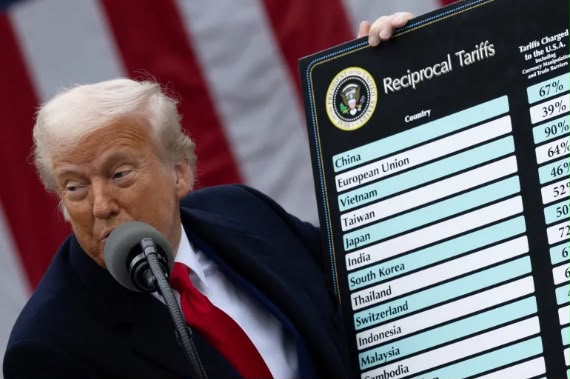
Twenty-five Democratic-led states in the United States have filed a lawsuit challenging President Donald Trump’s latest tariffs on trading partners, arguing that the administration exceeded its legal authority in imposing the new levies.
The suit was filed on Monday at the US Court of International Trade and targets double-digit tariffs introduced last month on imports from 60 trading partners.
The administration said the tariffs were imposed because the affected countries had failed to take adequate steps to prevent goods made with forced labour from entering the United States.

The states, however, contend that the new measures are an attempt to revive tariffs previously struck down by the US Supreme Court.
New York Attorney General Letitia James, whose state is among the plaintiffs, accused the administration of attempting to impose what she described as unlawful taxes on American households and businesses after losing its earlier tariff battle before the Supreme Court.
The states involved in the lawsuit, including New York and Oregon, are led by Democratic governors or attorneys general.
The White House has rejected the challenge, maintaining that the tariffs are lawful and necessary to protect American workers and businesses from unfair trade practices.
White House spokesman Kush Desai argued that countries that fail to prevent the importation of goods produced through forced labour create unreasonable conditions that harm US commerce.
The dispute follows the Supreme Court’s earlier ruling against Trump’s use of the 1977 International Emergency Economic Powers Act to impose sweeping tariffs on imports.
Trump had relied on the law to introduce double-digit duties on goods from nearly every country, arguing that the longstanding US trade deficit constituted a national emergency.
The Supreme Court subsequently ruled that the law did not give the president the authority to impose tariffs, forcing the administration to establish a process for reimbursing importers who had paid the duties.
Following the ruling, Trump introduced temporary 10 per cent tariffs covering imports worldwide. Those measures expired at midnight on July 24.
The administration subsequently turned to Section 301 of the Trade Act of 1974, which allows the US government to respond to what it considers unfair or discriminatory trade practices by foreign countries.
The latest tariffs, introduced under that provision, affect more than 99 per cent of US imports.
Trump has repeatedly defended his tariff strategy as a means of rebuilding American manufacturing, reducing trade imbalances and protecting domestic industries.

However, the states argue that invoking forced labour concerns does not justify the broad application of the new tariffs.
They contend that the measures effectively reproduce the economic impact of the tariffs previously declared unlawful by the Supreme Court, rather than directly addressing forced labour.
The lawsuit is one of several legal challenges to Trump’s tariff policy. Two earlier cases brought by small businesses similarly questioned the administration’s authority to impose the duties.