RismadarVoice Reporters, June 24, 2026
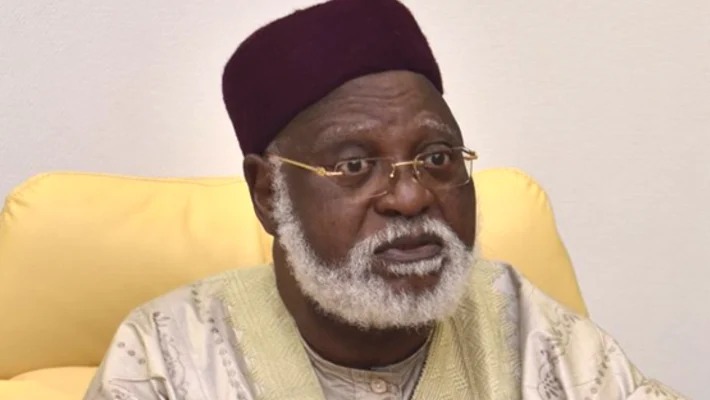
Prominent figures of the National Democratic Coalition (NADECO), Colonel Tony Nyiam (retd.) and Chief Ayo Opadokun, have challenged claims made by former Head of State, General Abdulsalami Abubakar (retd.), regarding the country’s transition to civilian rule and the circumstances surrounding the death of Chief Moshood Kashimawo Olawale (MKO) Abiola.
The disagreement follows revelations contained in Abdulsalami’s recently released autobiography, ‘Call of Duty’ in which he stated that some leaders of the pro-democracy movement privately urged him to extend military rule beyond the planned transition period in 1999. He also maintained that Abiola, the presumed winner of the annulled June 12, 1993 presidential election, died of natural causes rather than poisoning.
According to Abdulsalami, the request for an extension of military governance came a few months after he assumed office in 1998. He said he declined the proposal and challenged those involved to publicly acknowledge their position if they were serious about it.

The former military leader further cited findings from an autopsy conducted by a team of international pathologists, which reportedly concluded that Abiola died from health complications linked to hypertension and heart disease.
However, speaking in separate interviews, Nyiam and Opadokun rejected the former Head of State’s account, describing it as inconsistent with the objectives and activities of NADECO during the struggle for democratic governance.
Nyiam, who was active in NADECO’s overseas operations, said he was unaware of any recognised leader of the coalition advocating an extension of military rule. He stressed that the movement was founded to end military dictatorship and restore democratic governance.
According to him, the late Chief Anthony Enahoro, regarded as a leading figure within NADECO, consistently emphasised the need for a people-driven constitution to provide a solid foundation for democracy rather than prolonging military administration.
Nyiam recalled meetings held between NADECO leaders in exile and representatives of Abdulsalami’s government, noting that discussions centred on establishing a credible democratic process and constitutional framework.

He maintained that no prominent member of the coalition, including Chief Anthony Enahoro, General Alani Akinrinade (retd.), or other leaders abroad, ever supported an extension of military rule.
“Everything we stood for was aimed at ending military governance. The focus was on ensuring a genuine democratic transition, not prolonging military control,” he said.
Nyiam also questioned Abdulsalami’s position on Abiola’s death, arguing that many Nigerians remain unconvinced by the official explanation. He insisted that there are unresolved concerns surrounding the circumstances that led to the demise of the acclaimed June 12 winner.
He further challenged the former Head of State to identify individuals he claimed betrayed Abiola during the pro-democracy struggle.
The retired military officer credited figures such as Enahoro, Akinrinade, President Bola Tinubu, Dr Kayode Fayemi, and Nobel Laureate Prof. Wole Soyinka for their commitment to the democratic cause, saying they could corroborate his account of events.
Similarly, former NADECO General Secretary, Chief Ayo Opadokun, argued that Abdulsalami may have misunderstood discussions held between government emissaries and NADECO leaders based abroad.
According to Opadokun, the coalition’s position was not to extend military rule but to establish a stable democratic framework, including the adoption of a constitution broadly accepted by Nigerians before fresh elections were conducted.
He stated that NADECO had advocated the formation of a government of national unity led by MKO Abiola as part of efforts to resolve the political crisis generated by the annulment of the June 12 election.
Opadokun said reports from former NADECO members overseas suggested that Abdulsalami may have interpreted calls for constitutional reforms and political stability as support for prolonging military administration.
“The objective was to create a legitimate democratic order and not to encourage an extension of military rule,” he said.