RismadarVoice Reporters, May 27, 2026
Muslims in parts of India are increasingly facing restrictions on where they can hold Eid prayers, with reports of limitations on public gatherings, instructions to pray in shifts, and heightened police monitoring of religious spaces, according to accounts from Uttar Pradesh and other regions.
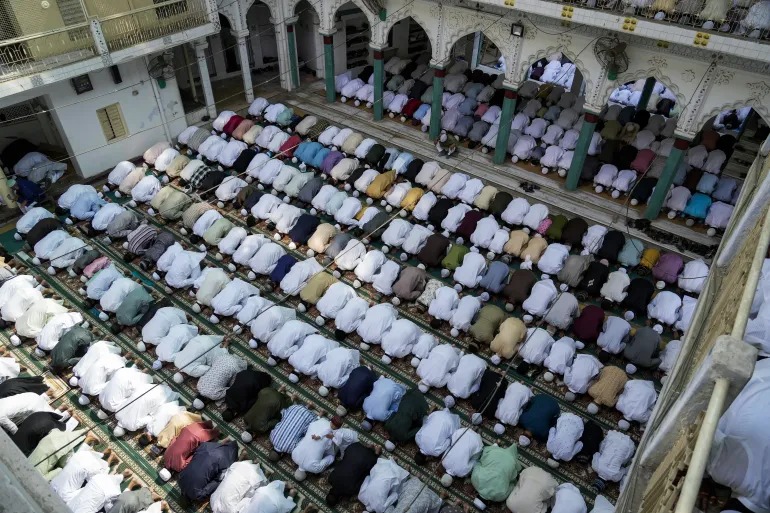
In Meerut district of Uttar Pradesh, mosque committees met ahead of Eid al-Adha to discuss arrangements, with worshippers advised to avoid overcrowding, refrain from spilling onto streets, and comply strictly with police advisories.

“Please don’t gather outside the mosque gates. If the mosque fills up, wait for the next prayer shift. Avoid arguments. Avoid videos. Don’t respond to provocations,” a mosque official was quoted as telling worshippers during preparations.
Residents say the tightening of restrictions has created anxiety around even routine religious gatherings, with some describing a growing sense of fear about public visibility during major Islamic festivals.
“People are naturally scared,” one resident said, citing past incidents in which Muslims were allegedly booked for praying in open spaces, while others reported fears of surveillance and possible reprisals.
Local Muslim communities say they are increasingly coordinating with authorities in advance of Eid to avoid confrontation, including reducing congregation sizes and dispersing worshippers quickly after prayers.
The concerns come amid long-standing tensions over the use of public spaces for religious gatherings in India, particularly in densely populated urban areas where mosque capacity is often insufficient for large crowds.
Authorities in some states have previously urged Muslims to hold Eid prayers in shifts or within designated areas, citing security and traffic management concerns. However, community members argue that such measures effectively limit their ability to observe the festival collectively.
In Uttar Pradesh, the state government has intensified enforcement around public gatherings in recent years, with reports of increased police oversight of religious events and restrictions on prayers in open spaces.
Rights activists and researchers say the situation reflects broader debates in India over religious visibility in public spaces and the balance between public order regulations and constitutional guarantees of religious freedom.
Muslims interviewed described a shift in the atmosphere around Eid, from communal celebration to caution and uncertainty.

“Earlier, Eid mornings felt joyful. Now there is tension from the night before,” one worshipper said.
Despite the restrictions, preparations for Eid continue across communities, though many say celebrations are now more subdued, with families prioritising compliance and avoiding public attention.