RismadarVoice Reporters, May 25, 2026
As military tensions involving Iran continue to strain U.S. defence resources, Washington is increasingly confronting another challenge beyond the battlefield securing access to tungsten, a strategic metal essential for advanced weapons production and currently dominated by China.
Tungsten, a dense and heat-resistant metal used in missiles, fighter jets, armour-piercing ammunition and bunker-buster bombs, has become a critical resource as the United States works to replenish weapons stockpiles depleted by ongoing military operations.
The growing demand has intensified concerns over America’s dependence on China, which currently controls more than 80 per cent of global tungsten production and refining capacity.
Analysts say the situation has pushed the United States into an urgent search for alternative supply sources worldwide.

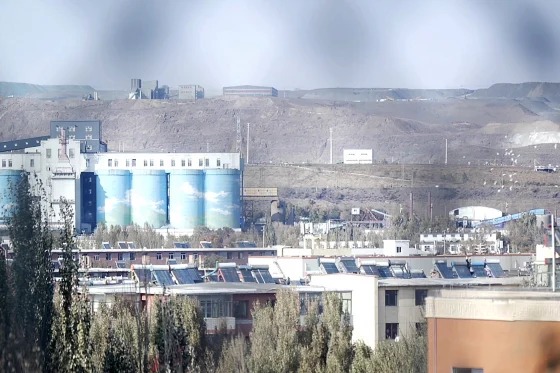
One emerging solution is South Korea, where a U.S.-owned mining company, Almonty Industries, recently reopened the Sangdong tungsten mine in Yeongwol County after more than three decades of inactivity.
The mine, once a major contributor to South Korea’s economy, is now being viewed as strategically important for Western security interests.
“There are very few large-scale tungsten mines on the planet,” said Lewis Black, Chief Executive Officer of Almonty Industries.
Black described tungsten as a long-standing “war metal” that has evolved into a key material for modern technology industries, including semiconductors, batteries and smartphones.
“In recent decades it has become a backbone metal,” he said.
Industry experts warn that demand for the metal is expected to rise significantly in the coming years.
“The demand for tungsten is going to only increase,” said Steve Allen, Almonty’s Chief Operating Officer.
“So having a resilient supply chain for tungsten is going to be extremely important over the next decade and beyond.”
The United States has faced challenges rebuilding its domestic tungsten sector after commercial mining activities largely disappeared over the past decade. The country has had no active commercial tungsten mine since 2015 and currently relies heavily on imports and recycled supplies.
According to U.S. Geological Survey data, America imports more than 6,000 metric tons of processed tungsten annually.
The supply challenge worsened after China imposed export restrictions on several rare earth minerals and critical resources, including tungsten, amid ongoing trade tensions with the United States.
The move caused global prices to rise sharply and heightened concerns among U.S. policymakers about supply chain vulnerabilities.
Military analysts say the issue extends beyond the United States and could also affect key allies.
Japan depends on U.S.-supplied Tomahawk missiles, while South Korea hosts the THAAD missile defence system. Taiwan is also reportedly awaiting a multibillion-dollar U.S. weapons package.
Experts warn that rebuilding depleted weapons inventories could take years.

Mark Cancian, a senior adviser with the Centre for Strategic and International Studies, recently noted that restoring key munitions stockpiles to pre-conflict levels may take up to four years.
Meanwhile, Almonty plans to process approximately 1.2 million tons of tungsten ore annually from its South Korean operation and is pursuing additional mining projects in the United States.
The company recently relocated its headquarters from Canada to Montana, citing strategic alignment with U.S. defence interests.
Despite growing efforts to diversify supply chains, industry leaders warn that reducing dependence on China remains a long-term challenge.
Black noted that rebuilding a self-sufficient Western tungsten industry would likely take decades.
“You’ll make a significant impact in about a decade,” he said. “But becoming fully self-sufficient could take twenty years or more.”
As geopolitical tensions and military demands continue to rise, the global race for strategic minerals such as tungsten is increasingly becoming as important as the conflicts that drive their demand.