RismadarVoice Reporters, May 18, 2026
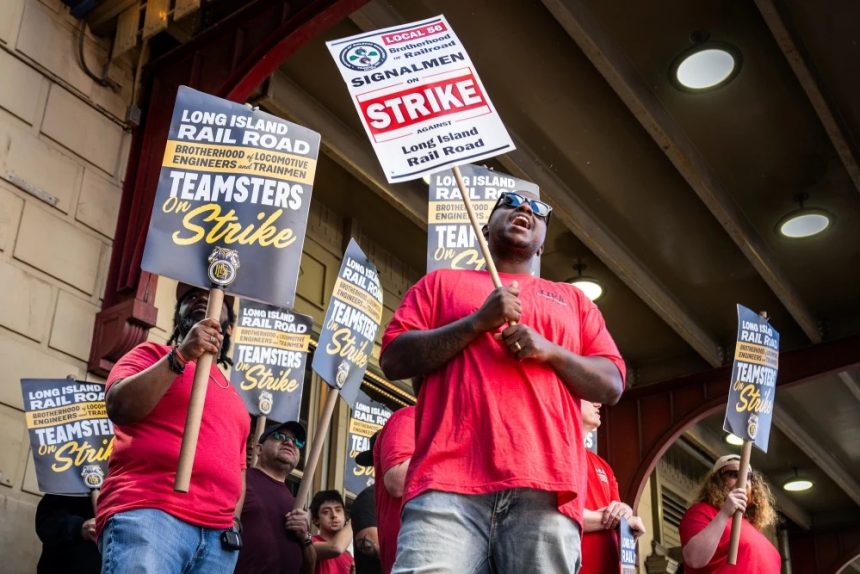
New York authorities are scrambling to contain what could become one of the region’s most disruptive transportation crises in decades after workers of the Long Island Rail Road (LIRR) embarked on a strike, crippling one of the busiest commuter rail systems in the United States.
The industrial action, triggered by stalled contract negotiations between rail unions and the Metropolitan Transportation Authority (MTA), has forced a complete suspension of LIRR services, threatening to affect hundreds of thousands of commuters travelling between Long Island and New York City.

Governor Kathy Hochul on Sunday urged residents capable of working remotely to stay at home as state authorities raced to implement emergency transportation measures to reduce anticipated congestion and travel disruptions.
“It’s impossible to fully replace LIRR service,” Hochul said while addressing reporters, acknowledging the scale of the challenge facing transport officials.
Emergency plans unveiled by the state include shuttle bus services connecting parts of Long Island to subway routes in Queens, alongside additional transit support aimed at easing commuter pressure.
The strike, reportedly the first on the rail network in nearly three decades, followed the collapse of negotiations over wages and compensation packages.
Despite the work stoppage, union representatives indicated discussions with MTA officials resumed on Sunday evening in hopes of reaching a breakthrough agreement.
New York City Mayor Zohran Mamdani also warned residents to prepare for disruptions as authorities continued to monitor developments.
Workers participating in the strike defended the action, insisting their demands were centred on fair compensation amid rising living costs.
Locomotive engineer Eric Martin said employees were fighting to preserve decent wages and living standards.
“It might take a few days, but we believe there will be a resolution,” he said.
Union leaders argued that employees had endured years without salary adjustments despite increasing economic pressure and insisted that the dispute could have been avoided.
According to the coalition representing approximately 3,500 rail workers, both sides were reportedly separated by less than one percentage point during final negotiations before talks collapsed.

MTA officials, however, blamed union leadership for walking away from discussions, maintaining that the agency remained open to continued dialogue.
MTA Chief Executive Officer Janno Lieber said management had not shut the door on negotiations.
Meanwhile, the standoff has left commuters uncertain as they prepare for potential delays, heavier road traffic and overcrowded alternative transport systems across the New York metropolitan area.