By Micah Jonah
March 1, 2026
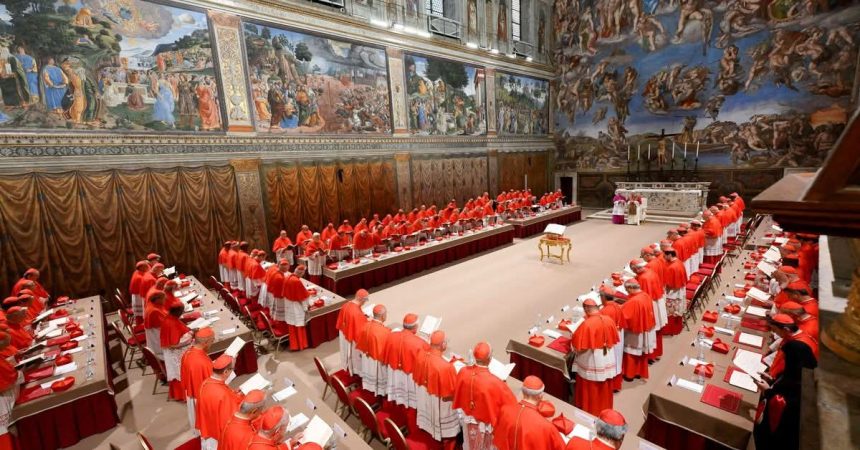
Fresh revelations have cast a dramatic spotlight on the secret conclave that elected Pope Leo XIV, after a new book disclosed that a cardinal was found carrying a mobile phone inside the Sistine Chapel during the highly confidential proceedings.
According to The Election of Pope Leo XIV, authored by veteran Vatican correspondents Gerard O’Connell and Elisabetta Piqué, the May 7–8 conclave was briefly interrupted when security systems detected an active mobile signal within the sealed chapel.
The conclave, which brought together 133 cardinals from 70 countries to choose a successor to Pope Francis, is governed by strict secrecy rules. Participants must surrender all communication devices, swear an oath prohibiting contact with the outside world. The Sistine Chapel is fitted with signal-jamming technology to prevent breaches.
As cardinals prepared for the first ballot, security officials reportedly flagged a live signal. The clerics looked at each other in disbelief before an elderly cardinal realized he had inadvertently kept his phone in his pocket. He immediately handed it over.
The authors described the episode as “unimaginable,” noting that nothing comparable had occurred in modern conclave history. The book does not name the cardinal and suggests there was no evidence of malicious intent.
Beyond the security breach, the publication offers rare insight into voting patterns inside one of the world’s most secretive elections. It reveals that two candidates quickly emerged as frontrunners: Italian Cardinal Pietro Parolin and U.S. Cardinal Robert Prevost, who would go on to become Pope Leo XIV — the first American pontiff.
On the first ballot, Prevost reportedly secured between 20 and 30 votes, a strong early showing. By the fourth ballot on May 8, he won decisively with 108 votes. Philippine Cardinal Luis Antonio Tagle, often cited as a potential favorite before the conclave, received fewer than 10 votes throughout the process.
The Vatican has not officially commented on the book’s claims. However, the disclosure adds a layer of drama to an already historic conclave that reshaped leadership of the 1.4 billion-member Catholic Church.
While the phone incident was quickly resolved, it has reignited debate over how even the most guarded institutions can face unexpected lapses in an age of constant connectivity.