By Micah Jonah, February 20, 2026
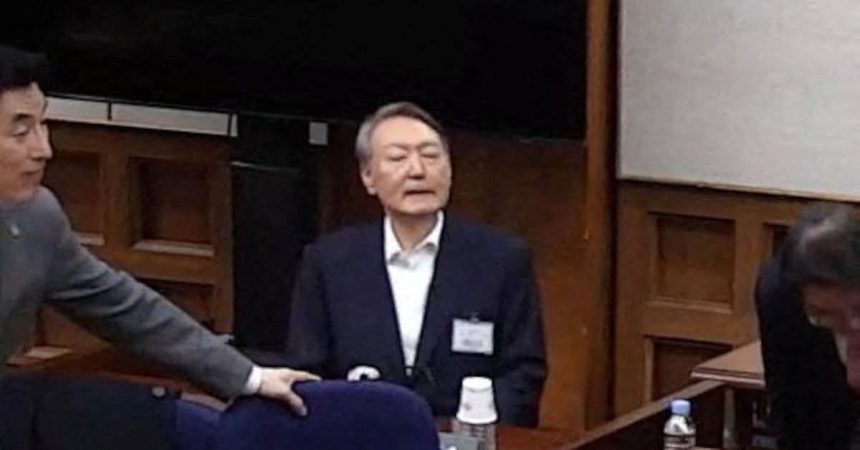
Former South Korean President, Yoon Suk Yeol has apologized to citizens following his sentencing to life imprisonment over his brief declaration of martial law in December 2024.
Yoon’s apology came a day after the Seoul Central District Court convicted him of masterminding an insurrection and handed down a life sentence.
In a statement released through his lawyers on Friday, Yoon expressed regret for the “frustration and hardship” caused by his decision but maintained that his actions were driven by what he described as sincere intentions.
While offering an apology, the former president insisted that the court’s decision was politically motivated, describing the verdict as predetermined and characterising the case against him as retaliation. He also raised concerns about judicial independence and questioned the value of pursuing an appeal under the current circumstances.
Yoon’s lawyers, however, clarified that his remarks should not be interpreted as a decision to forgo the appeal process.
The crisis began in December 2024 when Yoon declared martial law in what he said was a bid to address what he viewed as obstruction by opposition parties. The measure lasted approximately six hours before it was overturned by the National Assembly, triggering widespread protests and political turmoil across the country.
Prosecutors argued that Yoon attempted to subvert constitutional order by deploying troops to the National Assembly and moving to detain political opponents. A special prosecutor had initially sought the death penalty, although South Korea has not carried out an execution since 1997.
Yoon, a former career prosecutor before entering politics, consistently denied the charges during trial, maintaining that he acted within his presidential authority and in the national interest.
The life sentence marks a dramatic fall for the ex-leader, who was removed from office before facing criminal proceedings. Observers say the case represents one of the most significant political reckonings in South Korea’s recent history, underscoring the country’s strict stance on constitutional order and abuse of executive powers.