By Micah Jonah, February 19, 2026
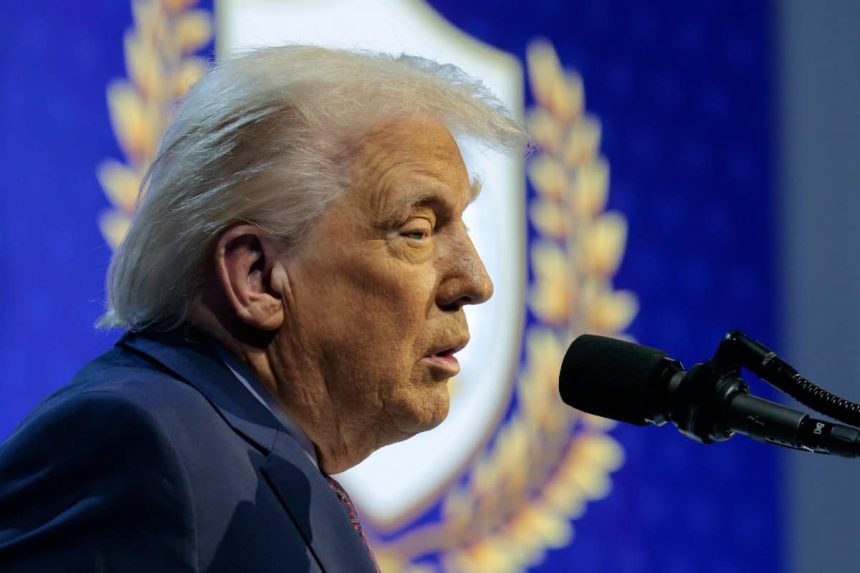
United States President, Donald Trump, is set to host the first summit of his controversial “Board of Peace” in Washington on Thursday, amid growing scepticism over the body’s ability to stabilise Gaza and enforce a fragile ceasefire between Israel and Hamas.
The meeting comes nearly three months after the United Nations Security Council approved a United States-backed ceasefire plan that granted the Board of Peace a two-year mandate to oversee reconstruction efforts in Gaza and coordinate an International Stabilisation Force.
However, analysts say the board is already facing credibility challenges, particularly in the wake of repeated ceasefire violations and the absence of Palestinian representation in its structure.
Political observers believe President Trump will seek to use the inaugural meeting to demonstrate that the board is viable and capable of delivering tangible results. Yousef Munayyer of the Arab Center, Washington DC noted that the US leader may be keen to show that countries are willing to participate in his initiative and commit resources to it.
The board currently has about 25 member states, with several others attending as observers. Israel joined the body in early February after initially expressing reservations, a move that has drawn mixed reactions from regional stakeholders.
President Trump, ahead of the summit, described the Board of Peace as having “unlimited potential” and claimed that member states would announce funding pledges amounting to five billion dollars for humanitarian and reconstruction efforts in Gaza. He also said countries had committed personnel for a stabilisation force to maintain security in the enclave.
Despite these assurances, experts warn that reconstruction efforts cannot succeed without a fully respected ceasefire. According to Laurie Nathan of the Kroc Institute for International Peace Studies, stability remains the most critical requirement before any meaningful rebuilding can begin.
Reports indicate that more than 72,000 Palestinians have been killed since the outbreak of hostilities in October 2023, with widespread destruction of infrastructure across Gaza. The humanitarian situation remains dire, with displacement affecting nearly the entire population.
Another contentious issue is the lack of Palestinian representation on the board. Analysts argue that excluding Palestinian voices could undermine the legitimacy of the initiative and weaken prospects for a lasting political settlement.
Annelle Sheline of the Quincy Institute for Responsible Statecraft stated that any real “proof of concept” for the board would require the United States to apply tangible pressure on Israel to adhere strictly to ceasefire terms. She noted that Gulf states are reluctant to finance reconstruction if there is a risk that infrastructure could be destroyed again in renewed hostilities.
Indonesia has reportedly signalled readiness to contribute troops to a stabilization force, but such deployment would likely depend on improved security guarantees.
Critics have also questioned the board’s structure, particularly President Trump’s role as chairman with veto powers, arguing that it raises concerns about multilateral transparency. Some Western allies have expressed reservations that the board could rival or sideline established global institutions such as the United Nations.
Nevertheless, diplomatic analysts say Thursday’s meeting will serve as a litmus test for the board’s seriousness. If the summit produces concrete commitments on ceasefire enforcement, reconstruction funding, and political inclusion, it could mark a turning point.
If not, scepticism over the Board of Peace may deepen, with doubts persisting over whether it represents a genuine diplomatic framework or a highly personalised initiative tied to President Trump’s political legacy.