By Micah Jonah
February 16, 2026
Tension is rising across Europe as the campaign to boycott Israeli goods gathers fresh strength, with workers, activists and some governments taking bold steps in response to the ongoing war in Gaza.
From supermarket aisles in Ireland to parliamentary chambers in Spain and Slovenia, the movement to cut economic ties with Israel is expanding, even as pro-Israel groups intensify efforts to counter it.
In a quiet seaside town in Ireland last August, a supermarket worker took a personal stand after seeing disturbing images from Gaza. Troubled by reports of mass casualties and destruction, he began quietly informing customers that certain fruits and vegetables were sourced from Israel.
As the humanitarian crisis worsened, he reportedly refused to scan or sell Israeli-grown produce, saying he could not support it in good conscience. Within weeks, retail giant Tesco suspended him.
However, following public protests and support from labour unions, the worker was reinstated in January and reassigned to a role that no longer requires him to handle Israeli products.
Across Europe, labour unions in Ireland, the United Kingdom and Norway have passed motions declaring that workers should not be forced to handle Israeli goods. Some retail cooperatives, including Co-op UK and Italy’s Coop Alleanza 3.0, have also removed selected Israeli products from their shelves.
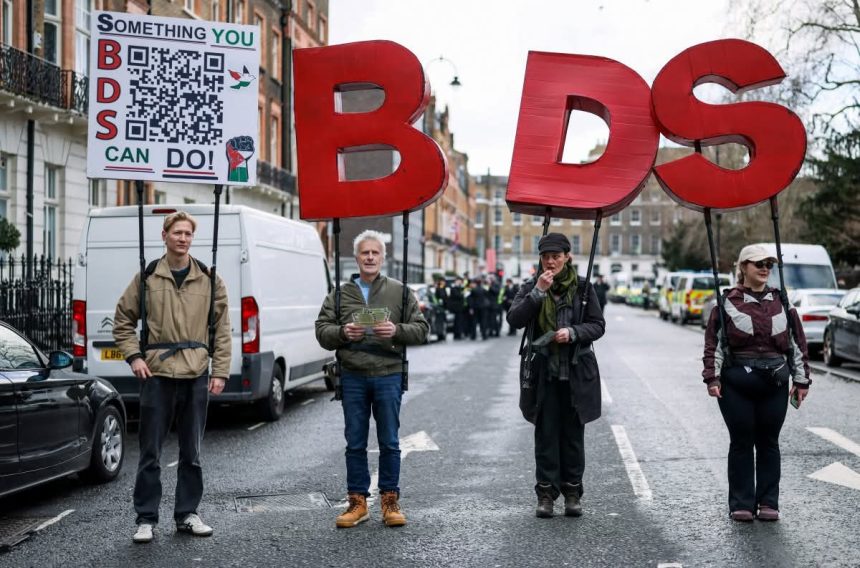
Activists behind the Boycott, Divestment and Sanctions (BDS) movement say the strategy mirrors historic labour actions, including the 1984 Dunnes Stores strike in Ireland against apartheid South Africa, which lasted nearly three years and influenced Ireland’s eventual trade ban on South Africa.
The BDS movement, launched in 2005, calls for economic and cultural boycotts of Israel until it complies with international law, including ending its occupation of Palestinian territories.
At the state level, Slovenia in August 2025 banned imports of goods produced in Israeli-occupied territories, becoming one of the first European nations to take such action. Spain followed later that year with a decree prohibiting imports from what it described as illegal Israeli settlements. The measure took effect at the start of 2026.
In Ireland, lawmakers continue to debate the long-delayed Occupied Territories Bill, first introduced in 2018, which seeks to prohibit trade in goods and services from settlements in occupied Palestinian territories. Although it has received unanimous backing in the lower house, progress has slowed amid legal and diplomatic concerns.
Meanwhile, pro-Israel organizations are pushing back strongly.
B’nai B’rith International, a US-based group that supports Israel and combats anti-Semitism, submitted an 18-page memorandum to Irish lawmakers in July 2025, warning that the proposed legislation could conflict with United States federal anti-boycott laws and create risks for American companies operating in Ireland.
In Germany, the Bundestag in 2019 passed a non-binding resolution describing the BDS movement as anti-Semitic and calling for the withdrawal of public funding from groups supporting it. Observers say the vote has influenced debates across Europe over the limits of political activism and free speech.
In the United Kingdom, efforts have also been made to prevent public bodies from adopting independent boycott policies. The proposed Economic Activity of Public Bodies (Overseas Matters) Bill sought to block local councils and public institutions from pursuing BDS-style measures but was shelved after a general election was called in 2024.
Despite legal battles and political resistance, public demonstrations continue to grow in cities including London, Amsterdam and Dublin, where protesters argue that economic pressure is one of the few tools available to ordinary citizens.
As the war in Gaza continues to dominate global headlines, Europe now finds itself divided – between those demanding stronger action against Israel and those warning that boycott campaigns risk deepening political and diplomatic tensions across the continent.