Micah Jonah
February 13, 2026
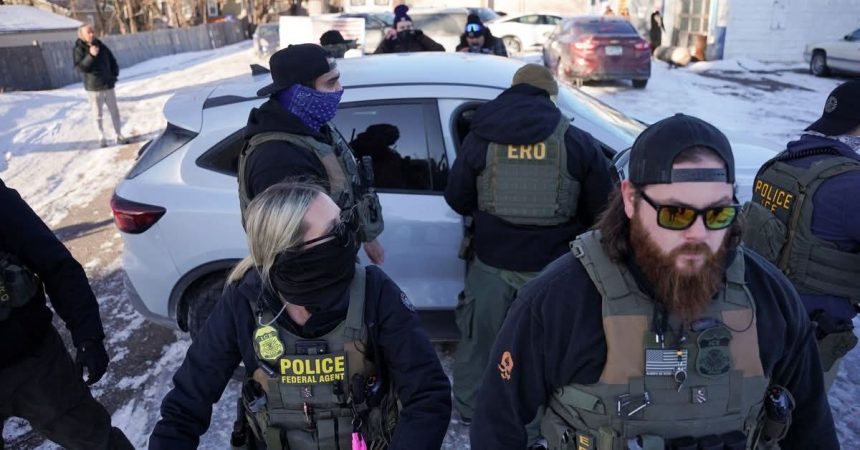
A United States federal judge has ordered Immigration and Customs Enforcement to guarantee detained immigrants access to their lawyers in Minnesota, after finding that the agency blocked thousands from seeing or speaking with legal counsel during a recent enforcement operation.
US District Judge Nancy Brasel ruled that ICE’s actions during “Operation Metro Surge” including rapidly transferring detainees out of Minnesota and limiting phone access effectively denied them their constitutional right to legal representation.
Brasel directed ICE to halt swift out-of-state transfers and ensure detainees are allowed private attorney visits and confidential phone calls. The temporary order will remain in effect for 14 days as the case proceeds.
The lawsuit was filed on January 27 by Democracy Forward, a nonprofit organization representing detainees. The group argued that individuals were held in conditions that obstructed access to legal counsel and oversight.
According to the ruling, many detainees were initially processed at the Bishop Henry Whipple Federal Building in Minneapolis before being transferred without notice, sometimes so quickly that ICE itself lost track of their locations.
The judge found that although ICE did not formally dispute detainees’ right to counsel, its practices isolated thousands from their lawyers. She rejected the agency’s claim that it lacked resources, noting that substantial resources had been deployed for the enforcement operation.
In one case cited in the ruling, a 20-year-old asylum seeker with a valid work permit was allegedly transferred between multiple states and held for 18 days despite a court order requiring his release after five days. The court also noted that some detainees were required to share limited phone access, with calls taking place in non-private settings.
A spokesperson for the Department of Homeland Security denied overcrowding at the Minneapolis processing centre and maintained that detainees have access to phones to contact family members and legal representatives.
The court’s decision underscores ongoing legal scrutiny of immigration enforcement practices and detainees’ constitutional rights in the United States.