Micah Jonah
February 8, 2026
Voting has commenced across Thailand in a high stakes general election that could once again reshape the country’s political direction, as reformist forces and military backed conservatives struggle for control amid fears of renewed instability.
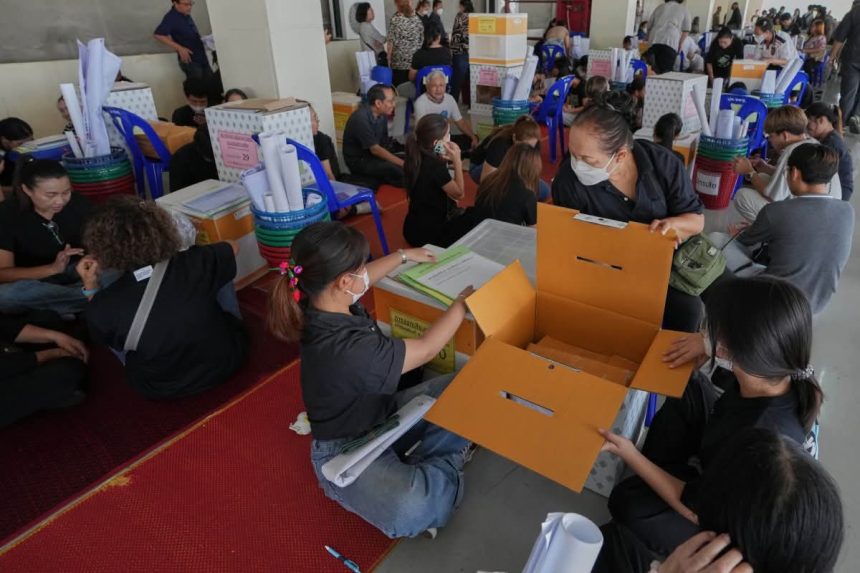
Polling stations opened early Sunday morning, with millions of Thai voters casting their ballots in an election widely seen as a test of whether democratic reform can finally take root in a nation that has witnessed frequent leadership changes, military interventions, and court imposed political setbacks over the years.
More than 50 political parties are contesting the polls, but analysts say only three have the nationwide reach, influence to shape the next government. These include the progressive People’s Party, the ruling Bhumjaithai Party, and the opposition Pheu Thai Party. With 500 parliamentary seats up for grabs and no clear frontrunner expected to secure an outright majority, coalition negotiations are almost certain after the results are announced.
The People’s Party, led by Natthaphong Ruengpanyawut, is tipped to win the highest number of seats. Its reform agenda focuses on reducing the influence of the military and judiciary in politics, as well as breaking powerful economic monopolies. However, its platform remains controversial among conservative blocs, raising the possibility that rival parties could unite to block it from forming a government, as seen in previous elections.
The ruling Bhumjaithai Party, headed by caretaker Prime Minister Anutin Charnvirakul, is viewed as the preferred option of Thailand’s royalist and military establishment. Anutin came to power less than a year ago following the removal of the previous administration and dissolved parliament in December to avoid a looming no confidence vote. His campaign has centred on economic stimulus, security, and nationalist sentiment, particularly following recent border tensions with neighbouring Cambodia.
Pheu Thai, closely associated with the political legacy of former Prime Minister Thaksin Shinawatra, is also in contention. The party has promised economic revival through populist policies, including cash support programmes, and has nominated Thaksin’s nephew, Yodchanan Wongsawat, as its prime ministerial candidate.
In addition to the parliamentary vote, citizens are also participating in a referendum on whether to replace Thailand’s 2017 constitution, which was drafted under military rule. Pro democracy groups argue that a new constitution is essential to curb the power of unelected institutions, while conservatives warn that constitutional changes could fuel further political uncertainty.
About 53 million people are eligible to vote in the election, with election officials confirming that over two million voters had already participated during the early voting window.
For observers across Africa, including Nigeria, Thailand’s election highlights the challenges many democracies face where civilian rule competes with entrenched institutional power. The outcome will not only determine Thailand’s next government but also signal whether the country is moving closer to stable democratic governance or bracing for another cycle of political tension.